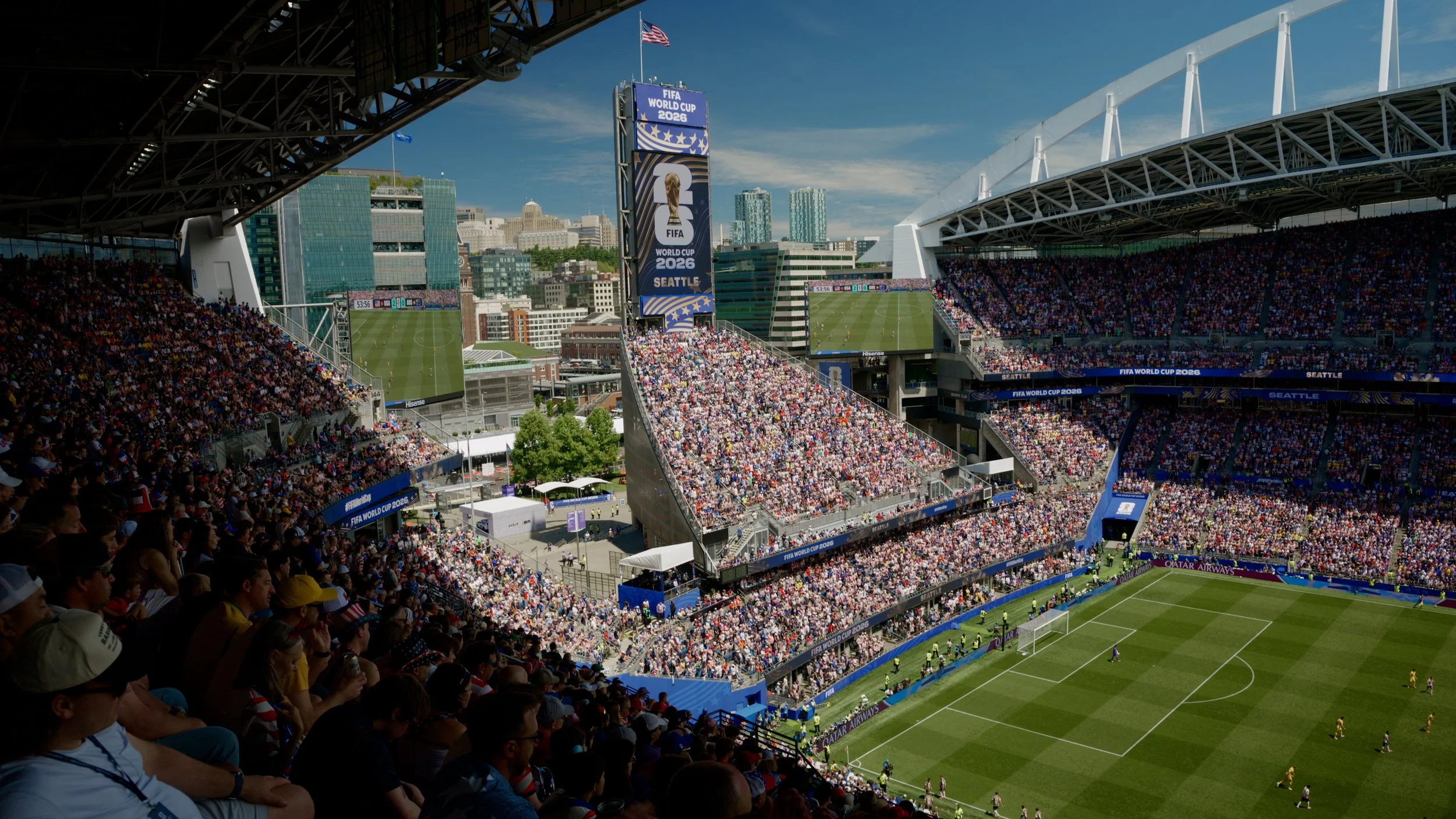
Now that the dust has settled, the banners are coming down, and the roaring echoes inside the stadium have quieted, we are left with the most important question of any major sporting event: What did we leave behind?
Hosting the FIFA World Cup 2026 was always going to be an athletic spectacle. But in Seattle, a city defined by both its cutting-edge innovation and its deep-rooted grassroots communities, the goal was never just to host matches. The goal for Black Players for Change was to help build a blueprint for intentional, equitable, and purpose-driven impact.
When the match schedule revealed that the United States Men's National Team would face Australia in Seattle on June 19th, the local organizing committee and BPC didn't see a scheduling coincidence; it felt like an invitation. To meet the magnitude of the moment, the local organizing committee formed the Juneteenth Matchday Advisory Committee, partnering with organizations like Black Players for Change, BlackPast.org, and the Northwest African American Museum to design programming built by and for the community.
That collaboration became the throughline for everything that followed: a day of history and celebration, weeks of youth access and economic investment, and a conversation about what comes next. Seattle didn't just welcome the world; it gave the world a masterclass in how a host city can lift up its own.
1. Juneteenth: Culture, Community, and Matchday Magic
Under the banner of The 19th initiative, the city set out to weave Black history, education, and community engagement directly into the fabric of the world's biggest game.
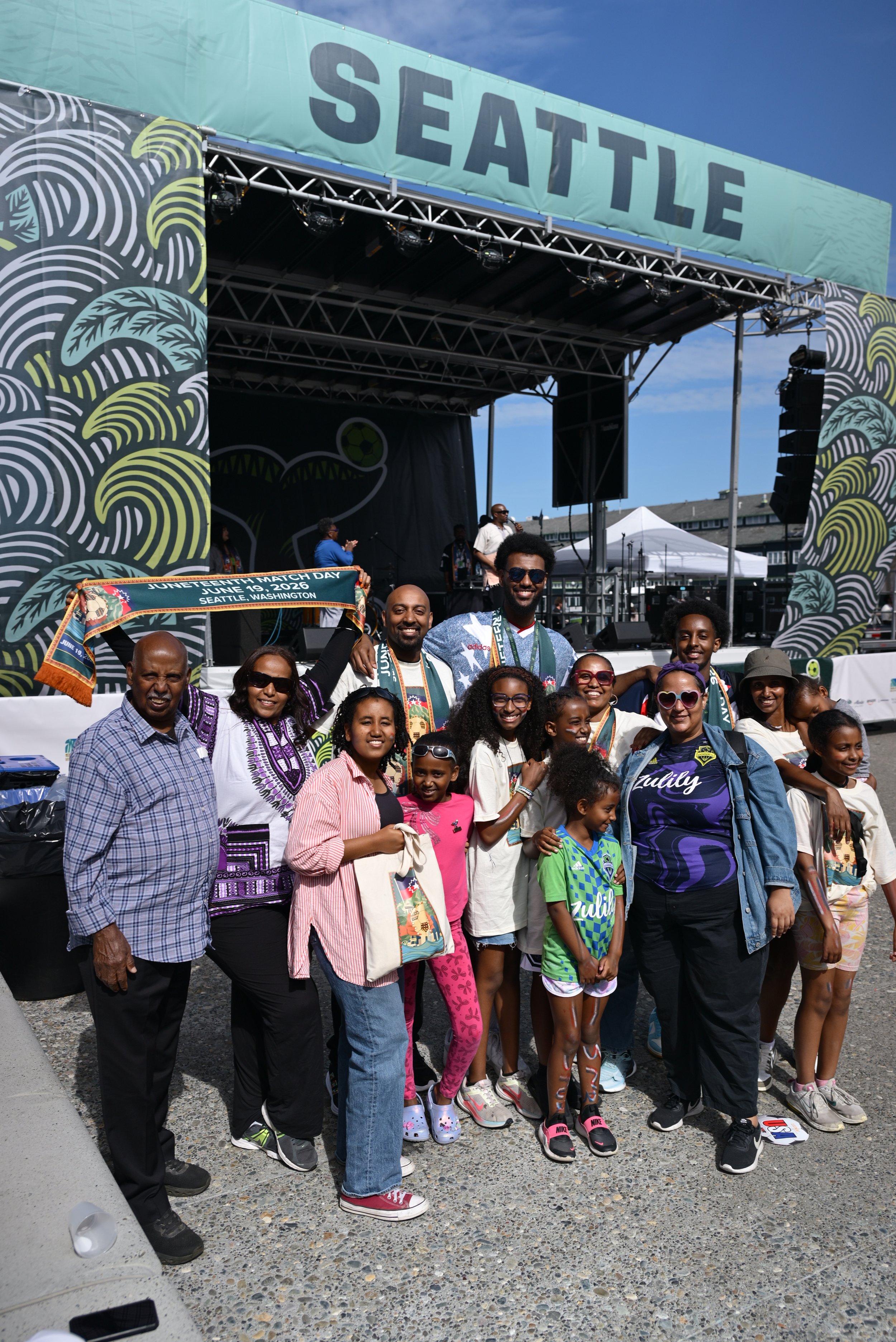
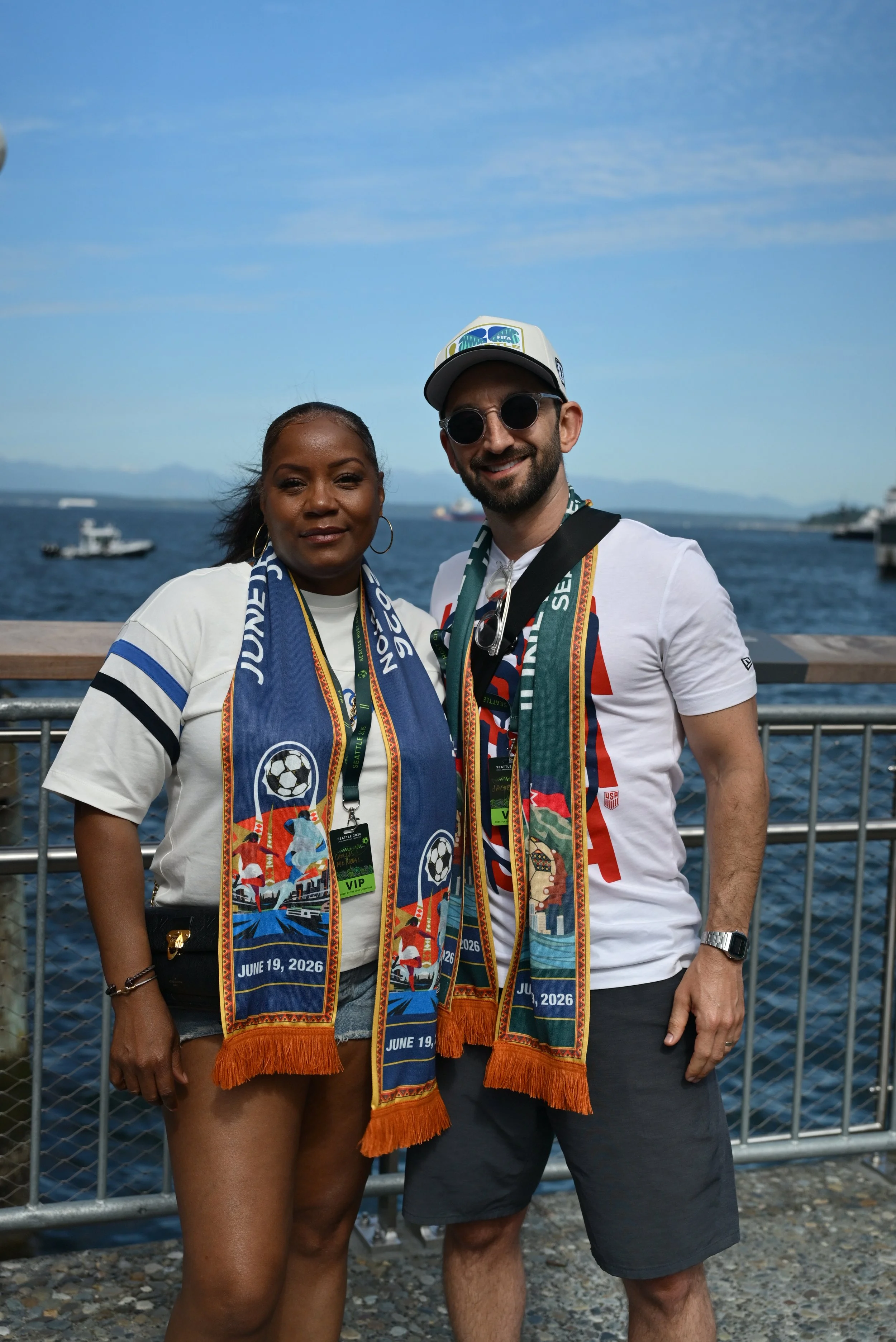
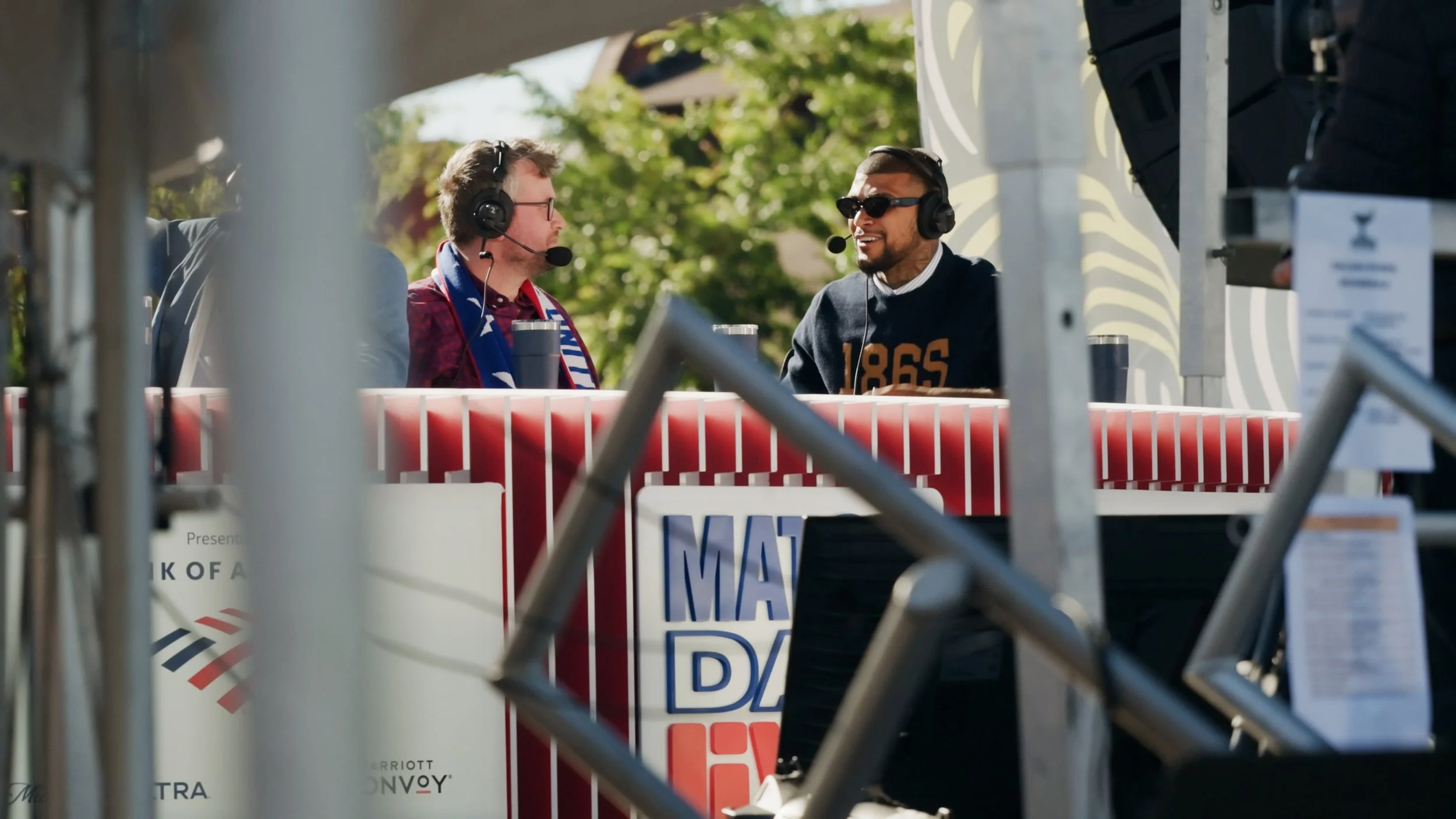
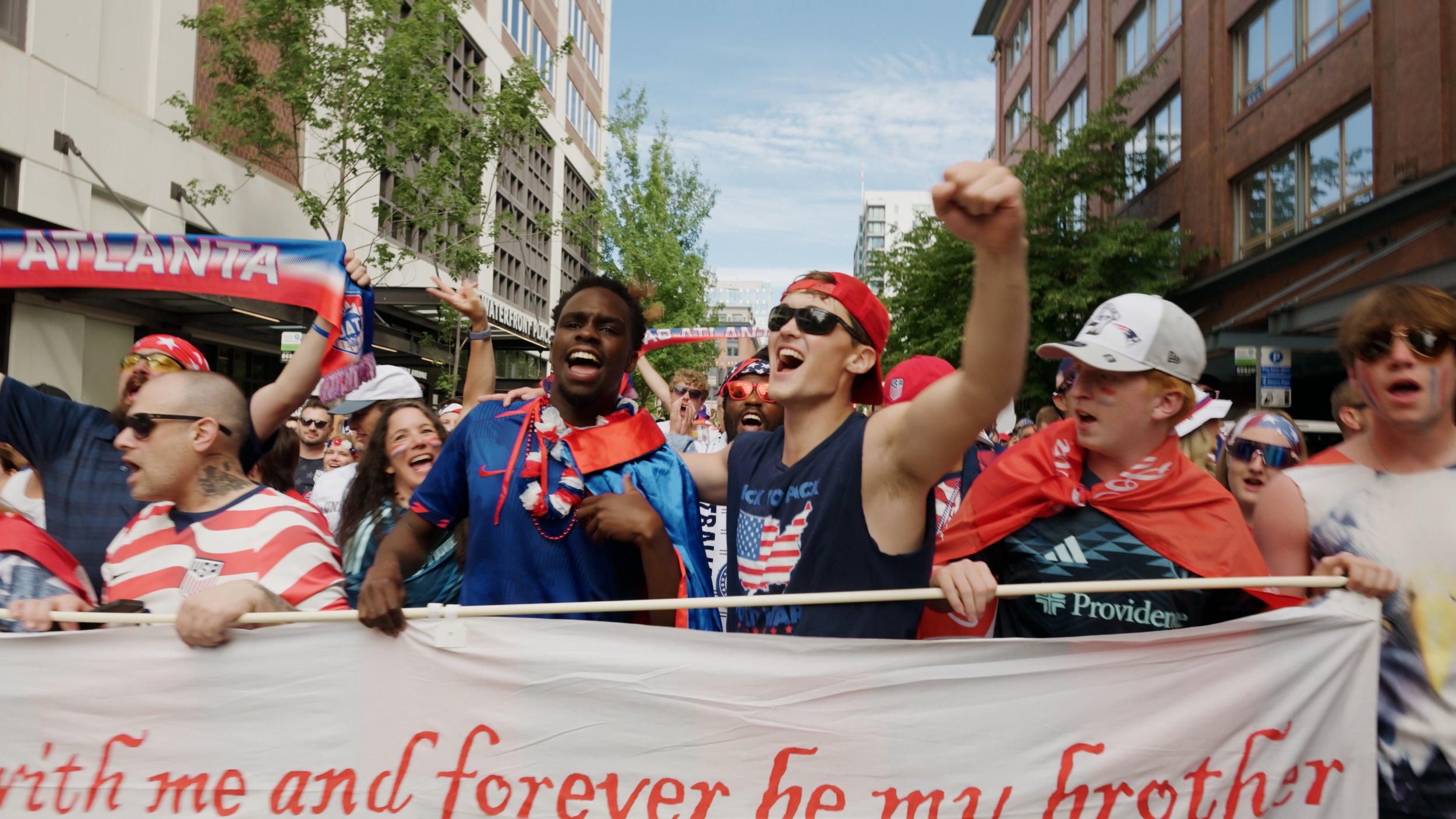
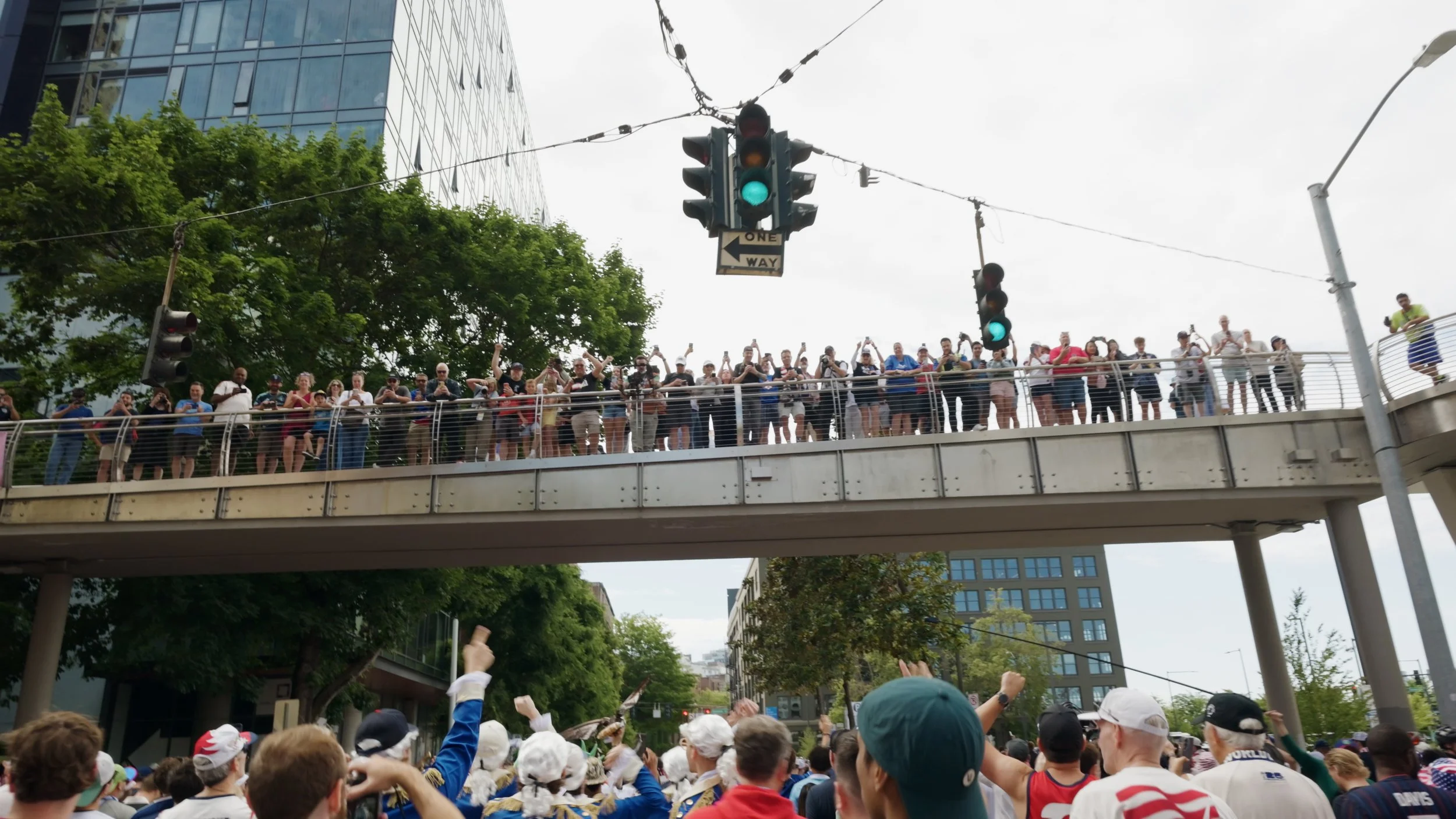
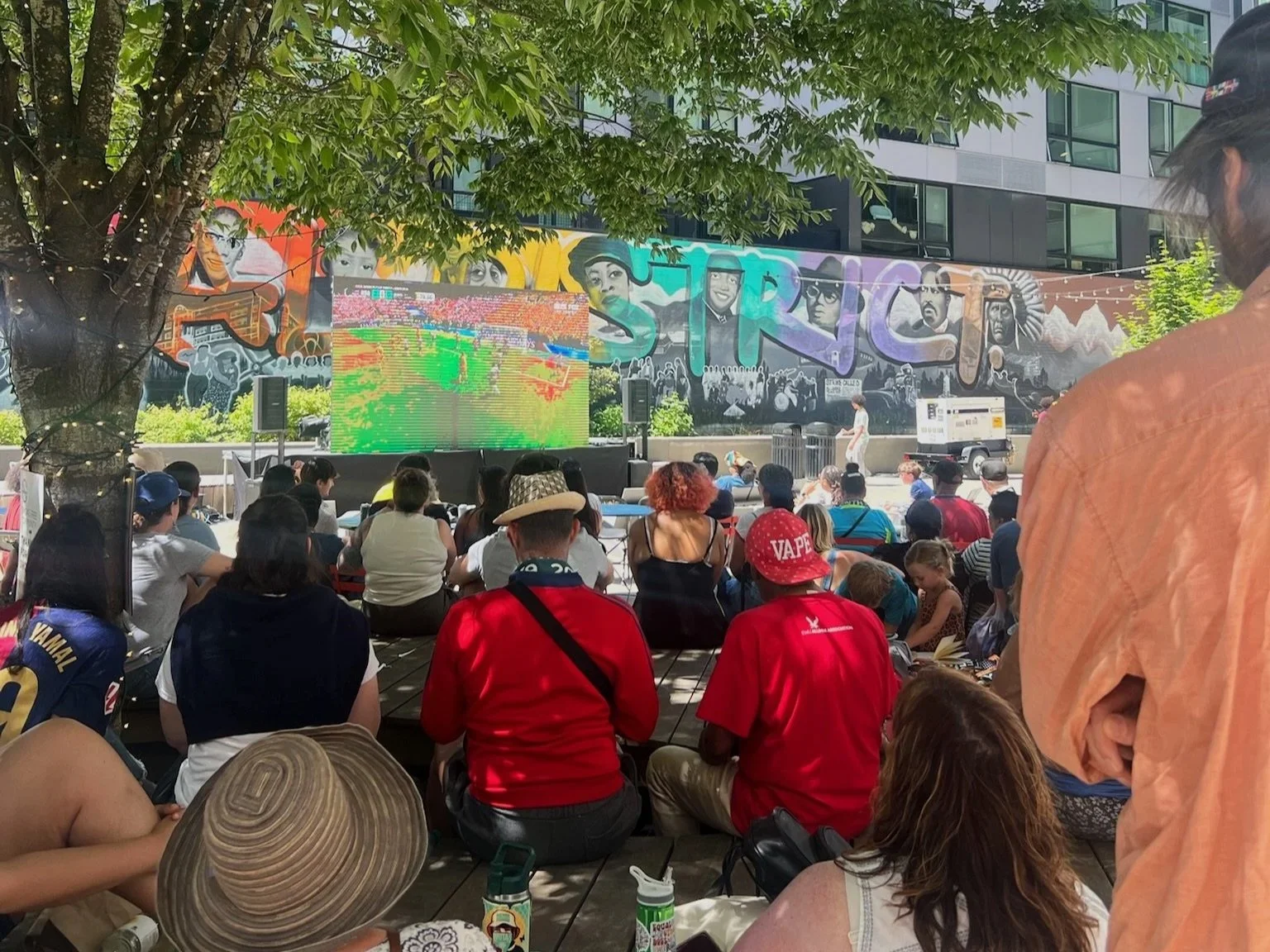
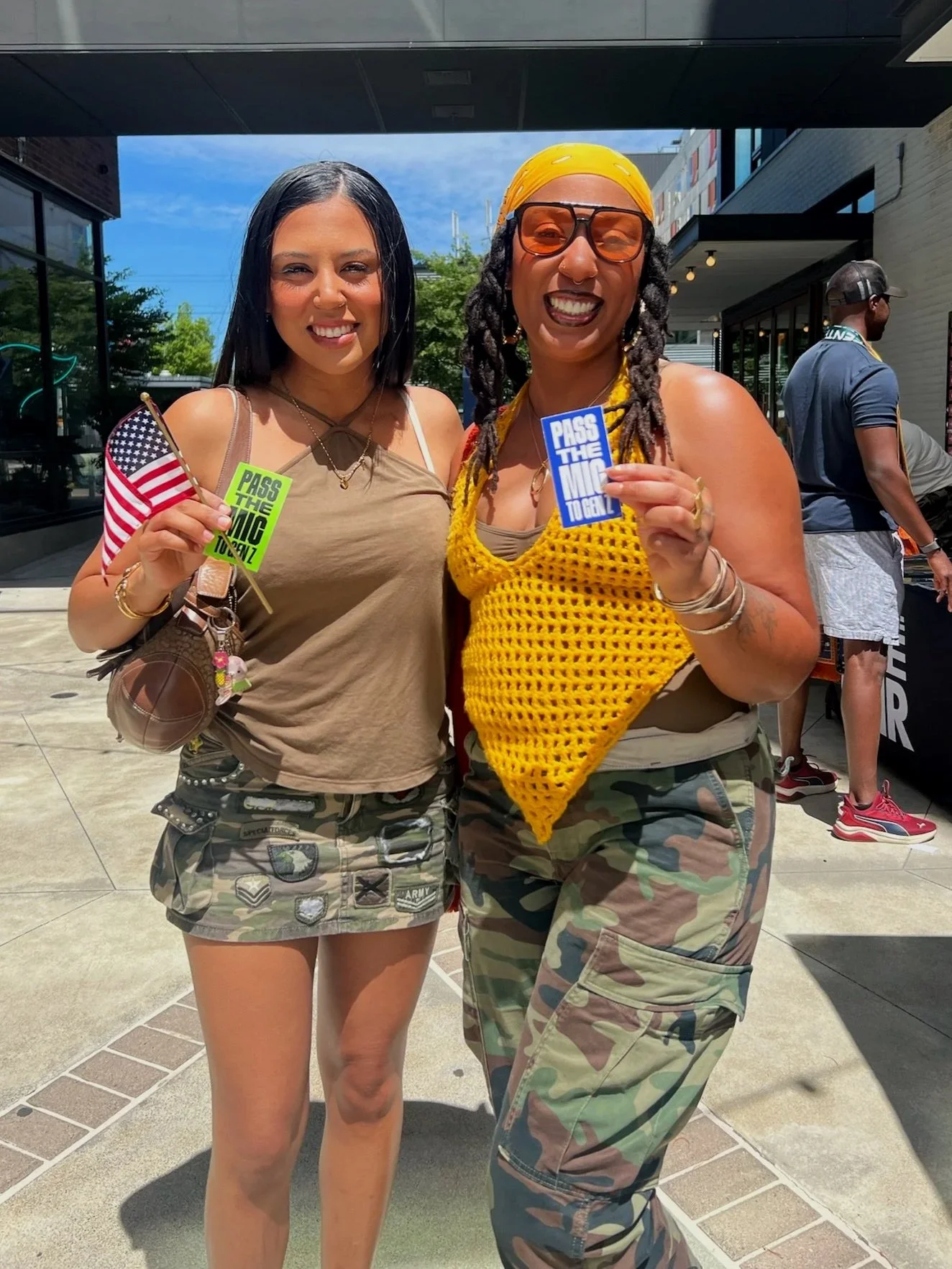
The celebration kicked off early on Friday morning as Pier 58 on Seattle's waterfront thrummed with a unique hybrid celebration. Thousands of soccer fans gathered to warm up for the game while absorbing a crucial history lesson. Local vocalist Gina Williams set the tone by singing "Lift Every Voice and Sing" before the energy translated into an unforgettable March to the Match, where Buffalo Soldiers proudly led a vibrant procession of fans straight toward the stadium gates. The celebration of freedom and legacy continued through the weekend with community events like the Freedom and Futbol watch party.
As the day moved toward kickoff, our Juneteenth educational video series featuring Gary Payton was shown an hour before the match inside Seattle Stadium, anchoring the holiday in deep historical context for a global audience. That video also featured in Boston, Philadelphia, and San Francisco on Juneteenth before those World Cup matches. By centering Black artistry and history, the global spotlight became a vehicle to celebrate real America, with all of its warts, wrinkles, and ultimate resilience.
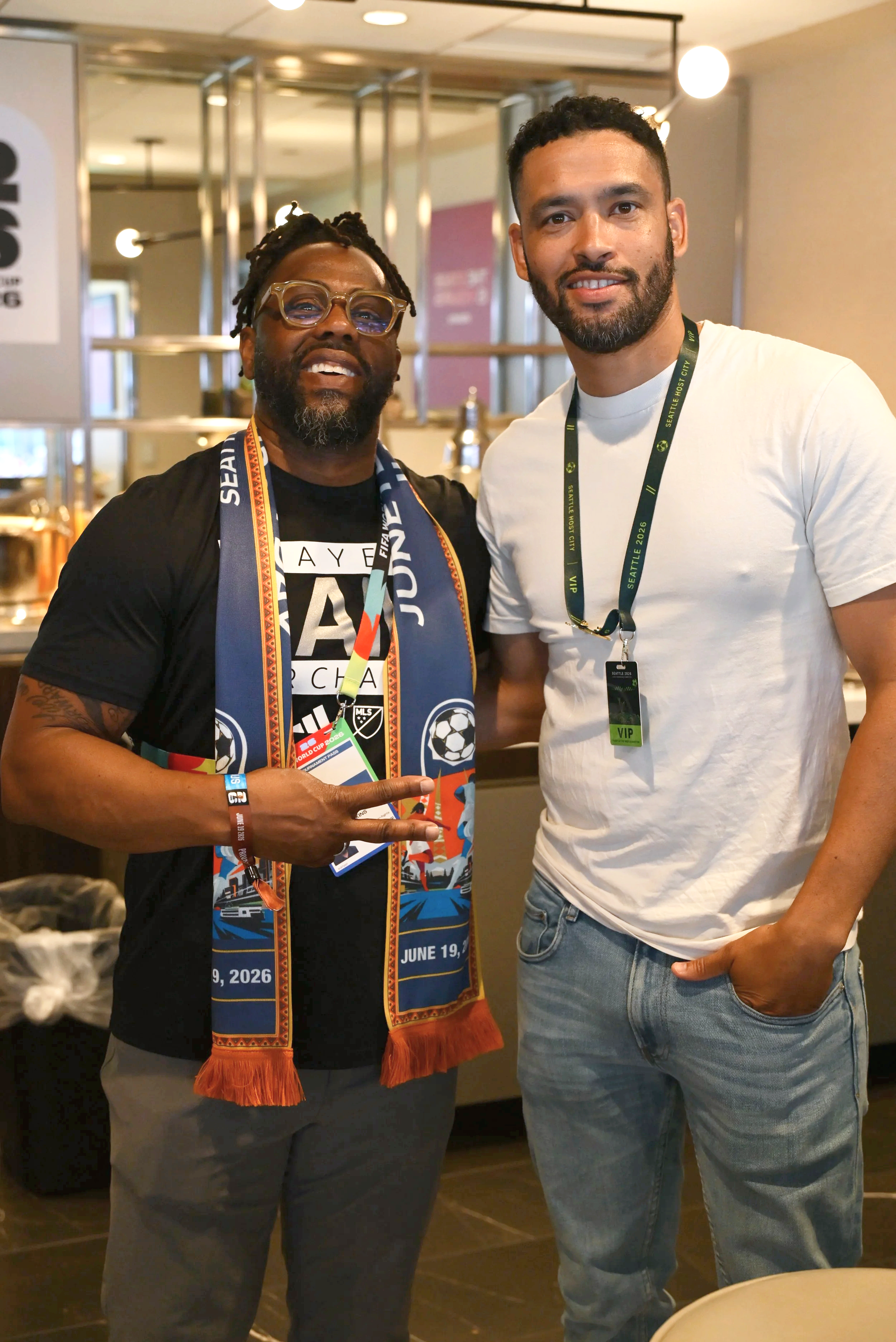
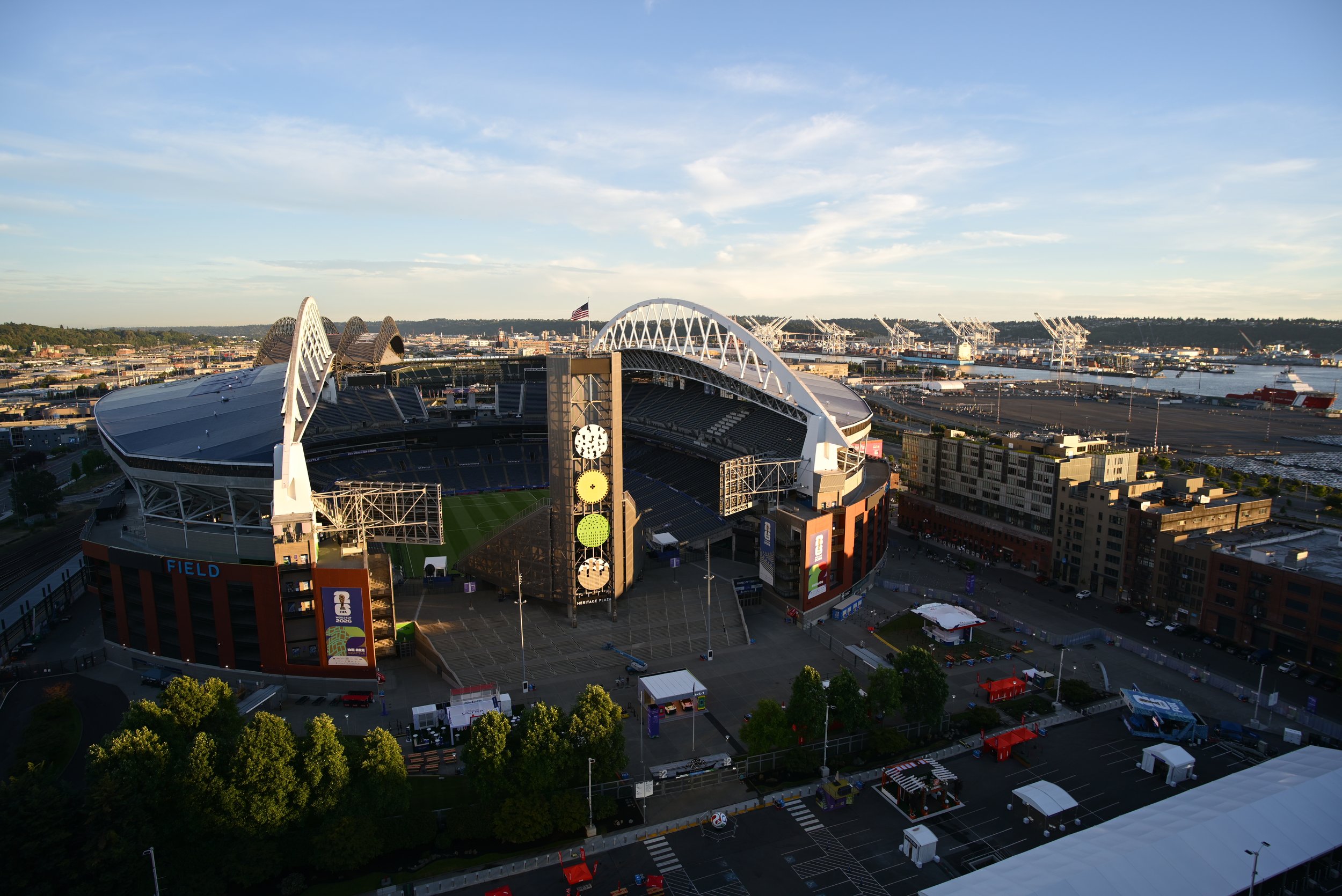
Celebrating a milestone of this scale also required intentional spaces for connection. Our rooftop reception overlooking Elliott Bay served as the perfect bridge between global change-makers, state leaders, and the grassroots organizers doing the heavy lifting on the ground. Against the backdrop of the Pacific Northwest twilight, partnerships were forged, ideas were exchanged, and the collective effort of the community was honored.
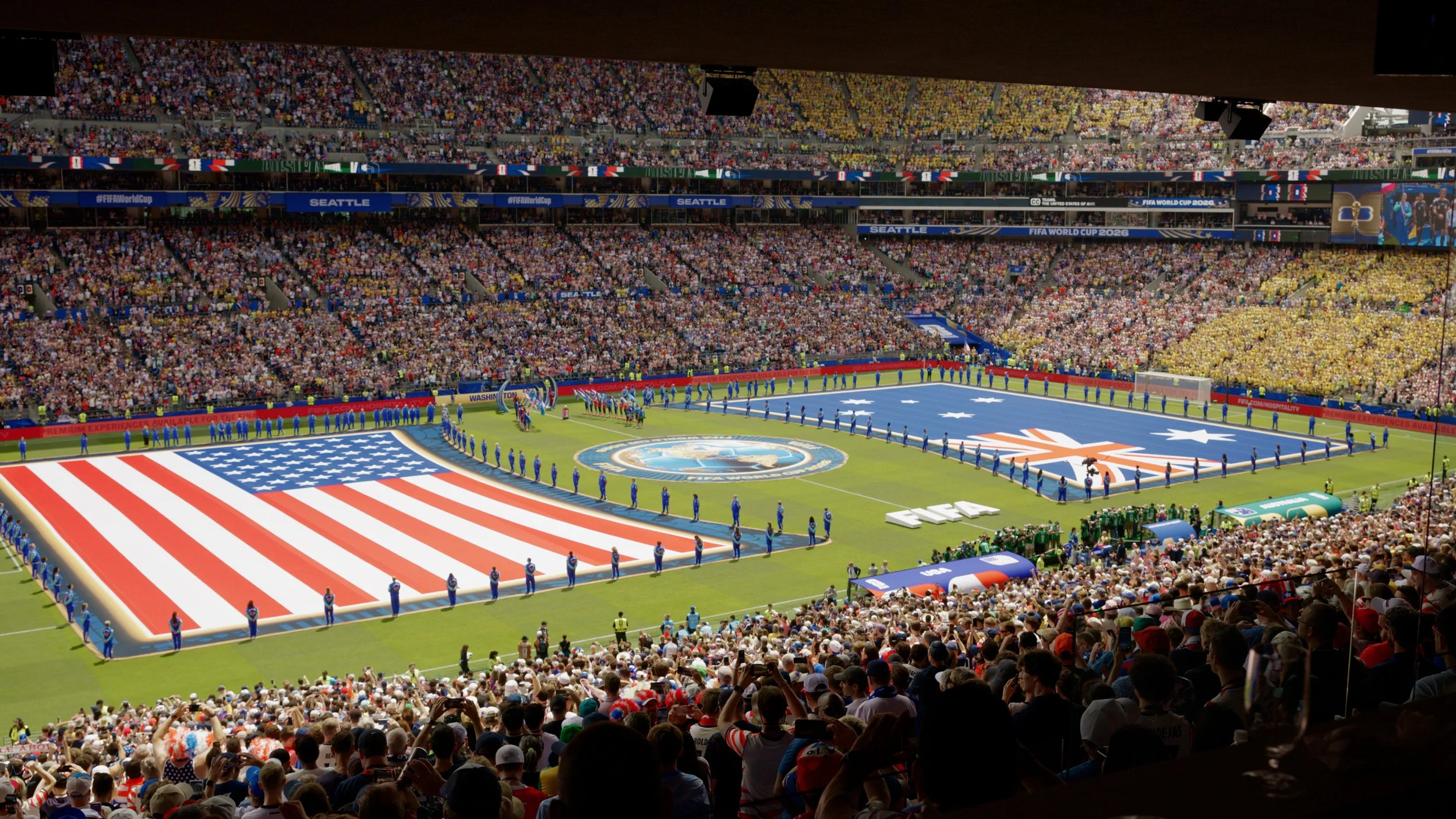
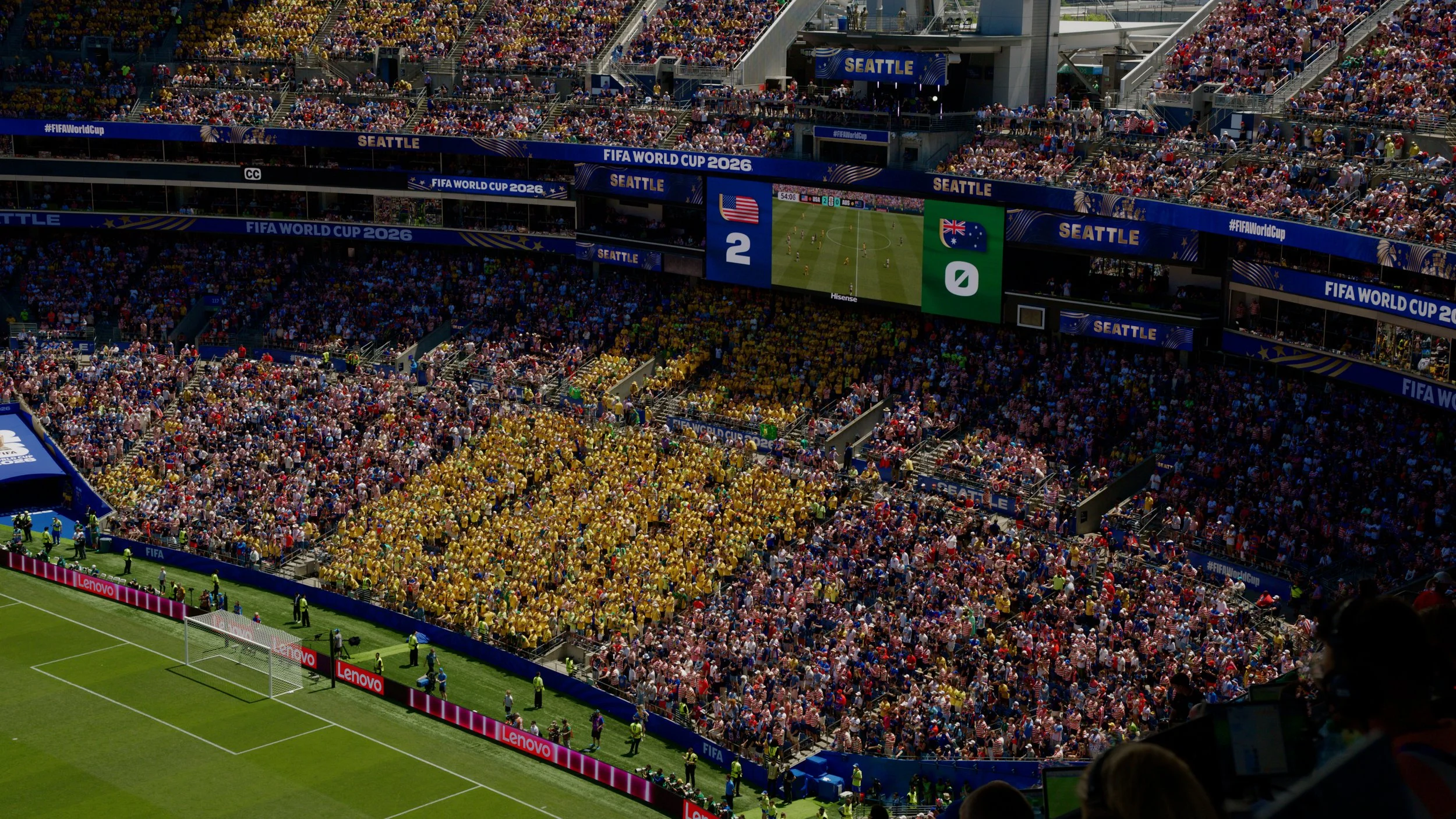
And when matchday finally arrived? The energy inside the stadium was nothing short of seismic. Driven by the roaring crowd, the USMNT delivered a thrilling 2-0 victory over Australia — a perfect athletic conclusion to a day that had already succeeded in highlighting freedom, representation, and opportunity on a global stage.
2. Planting Seeds: Youth Clinics and Real Access
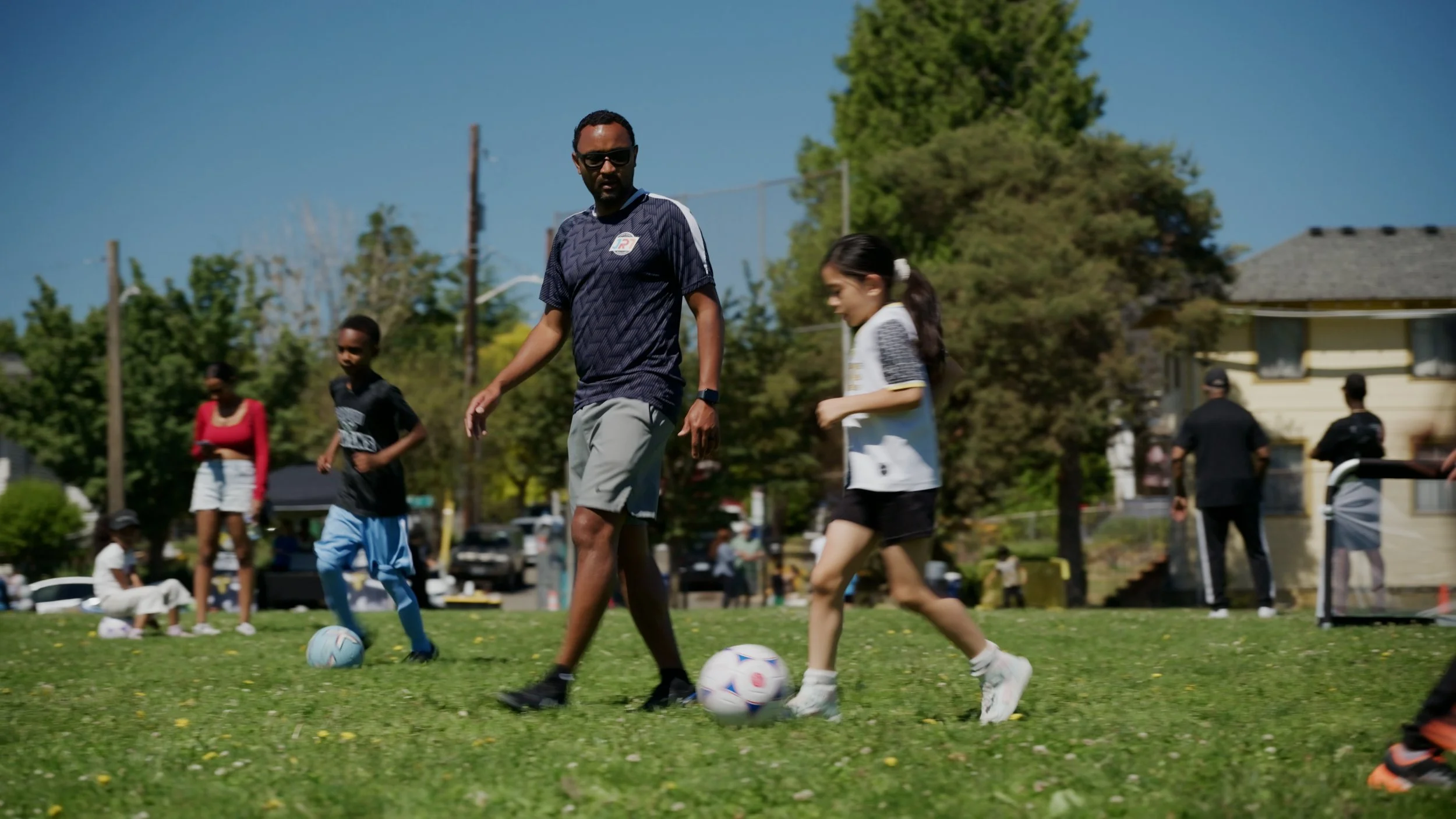
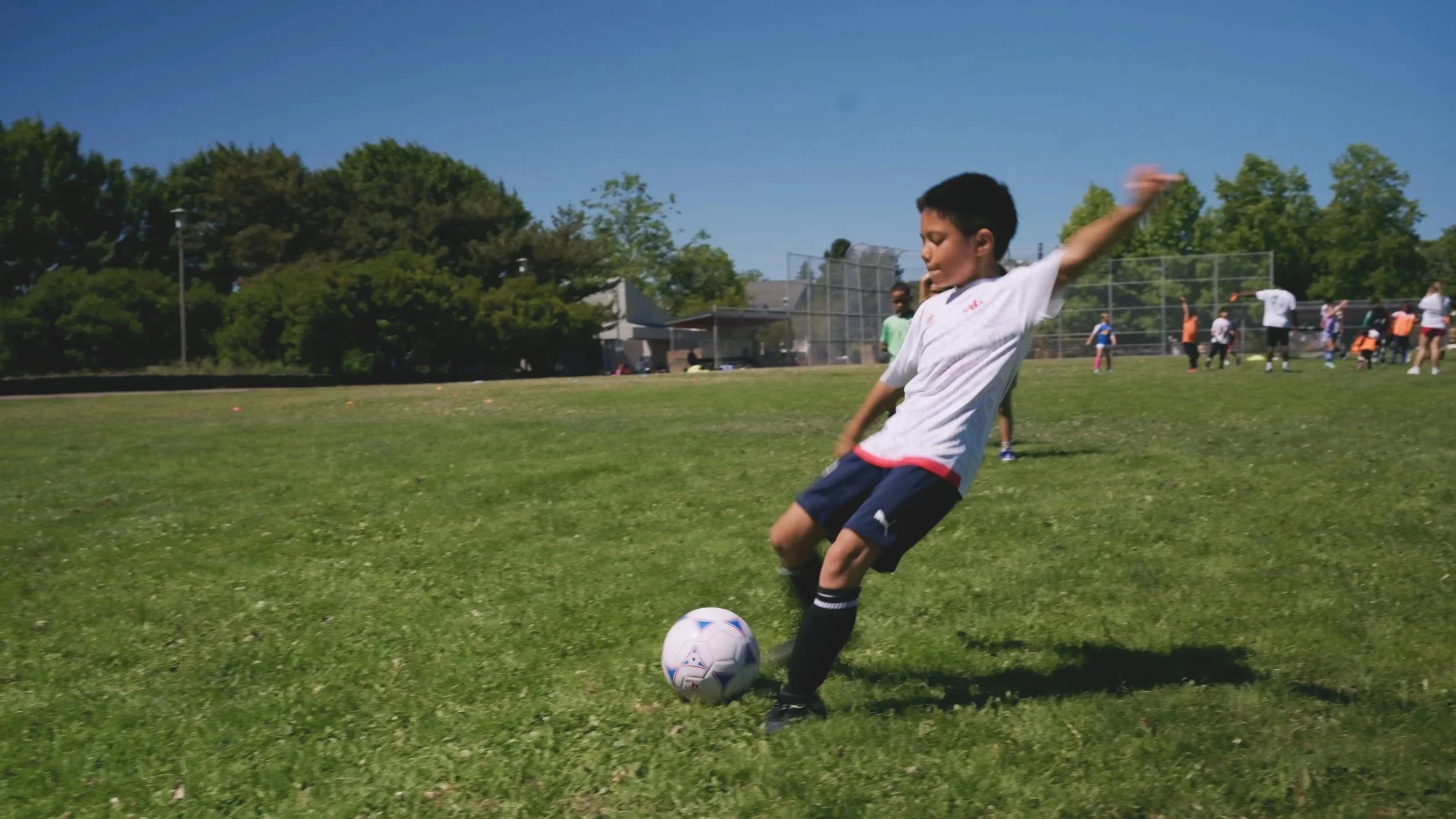
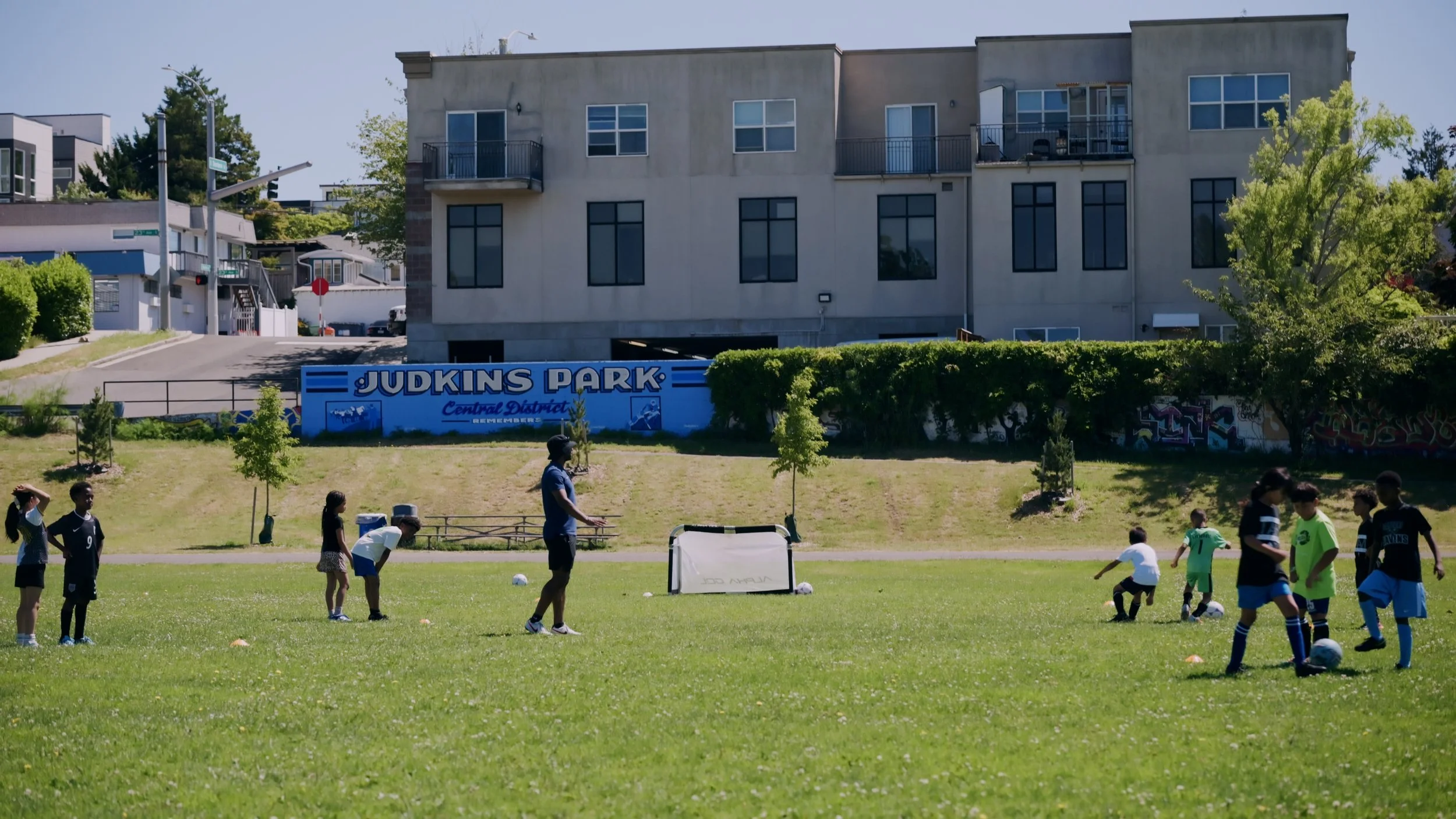
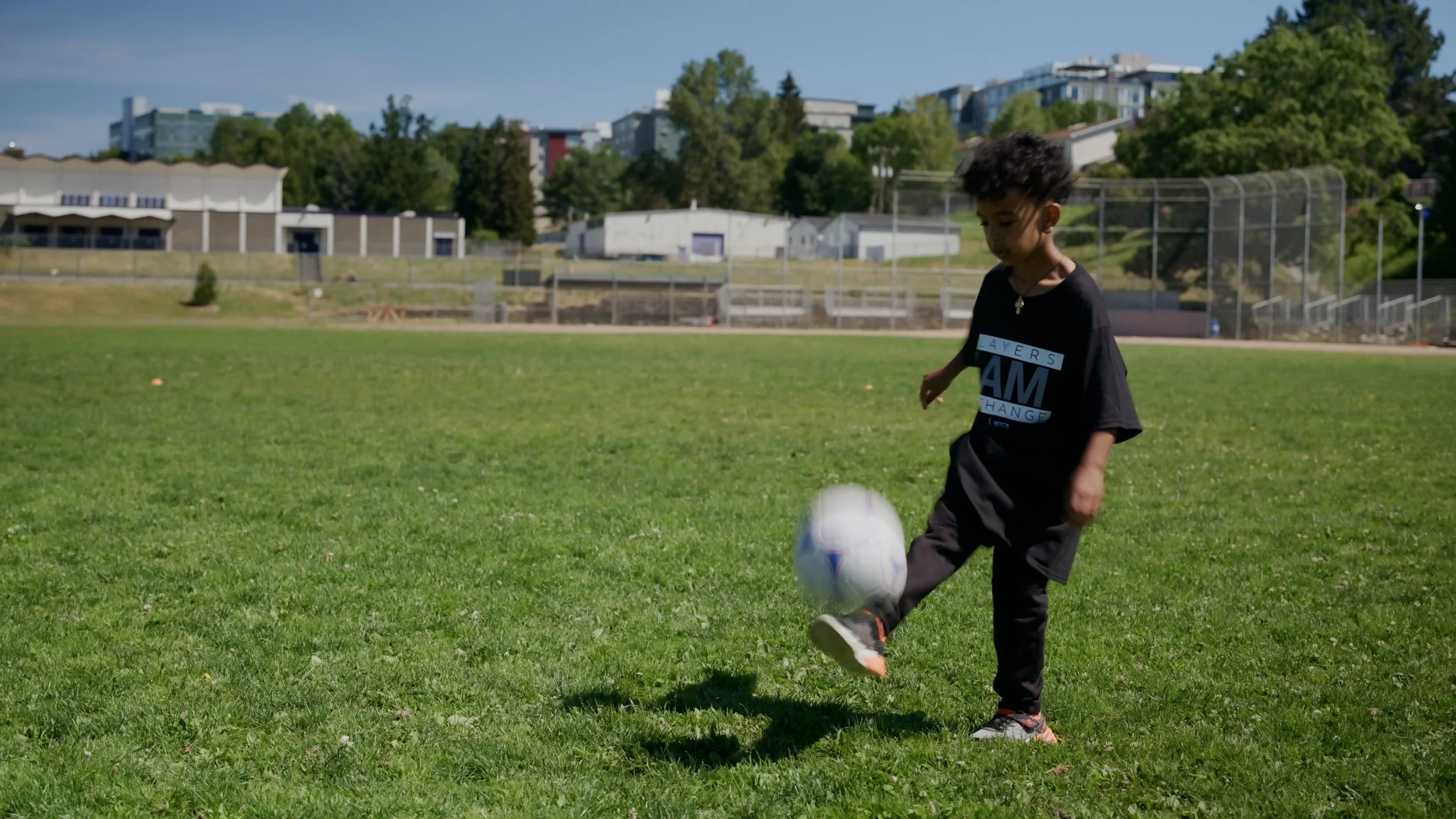
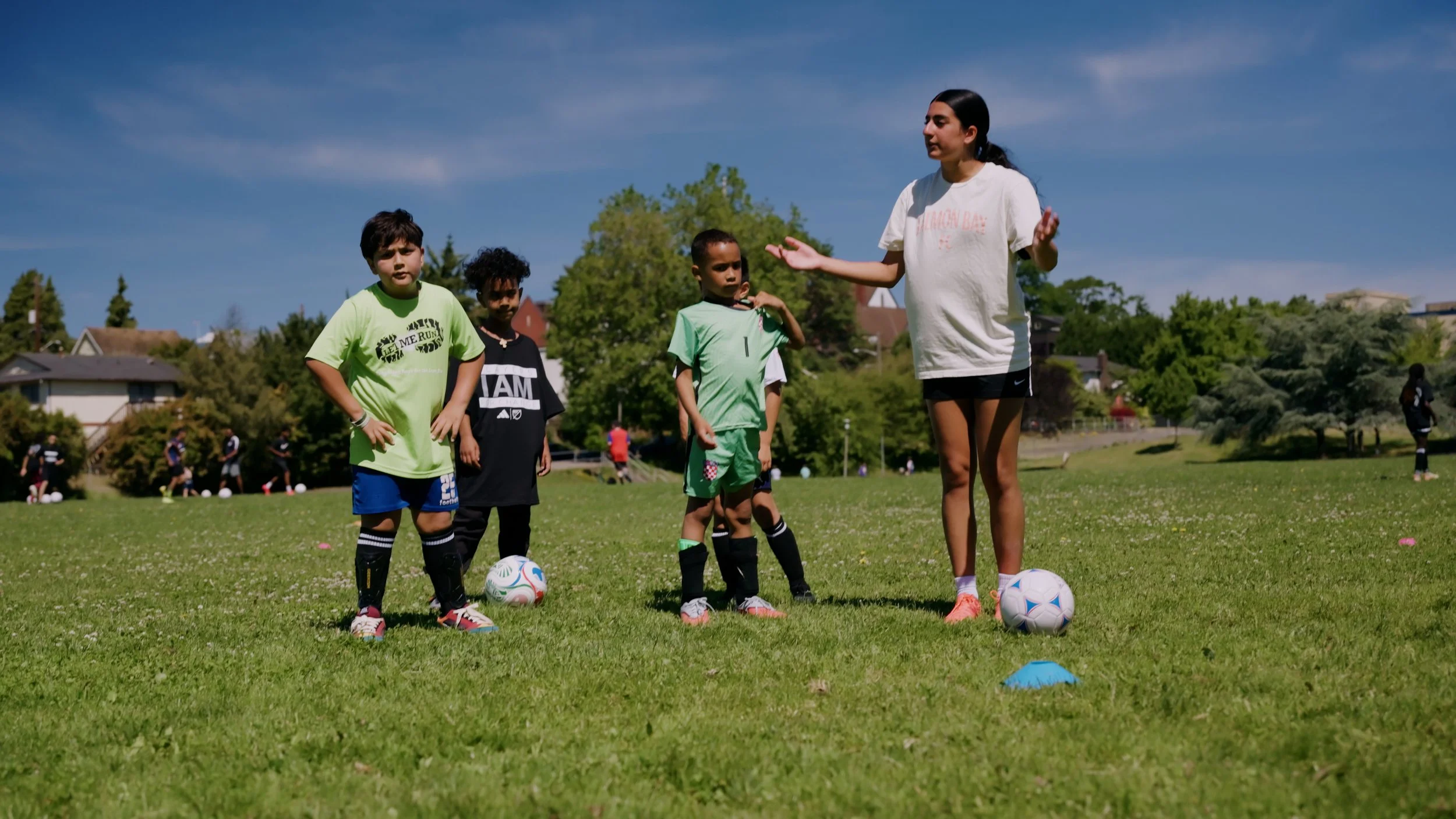
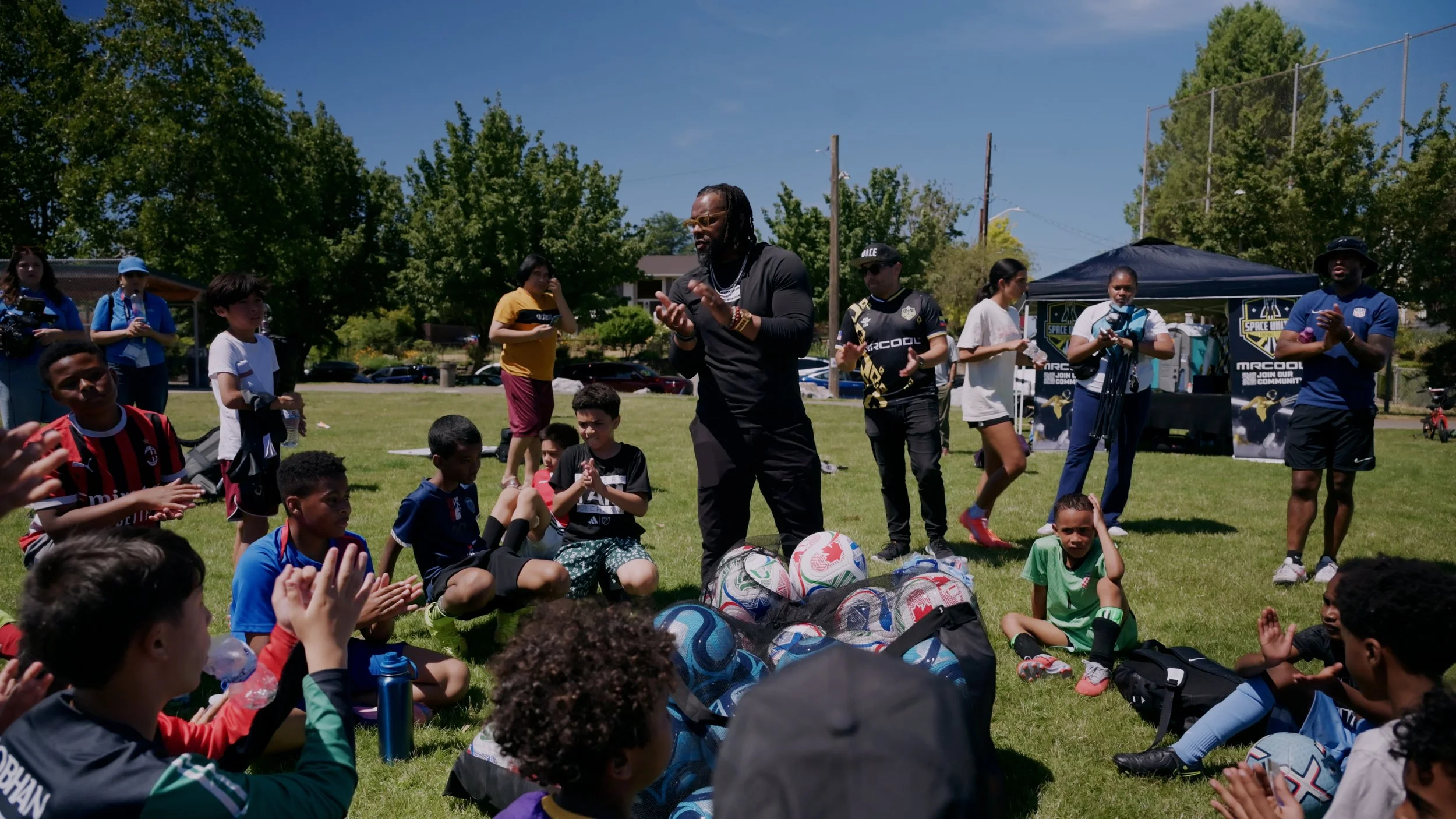
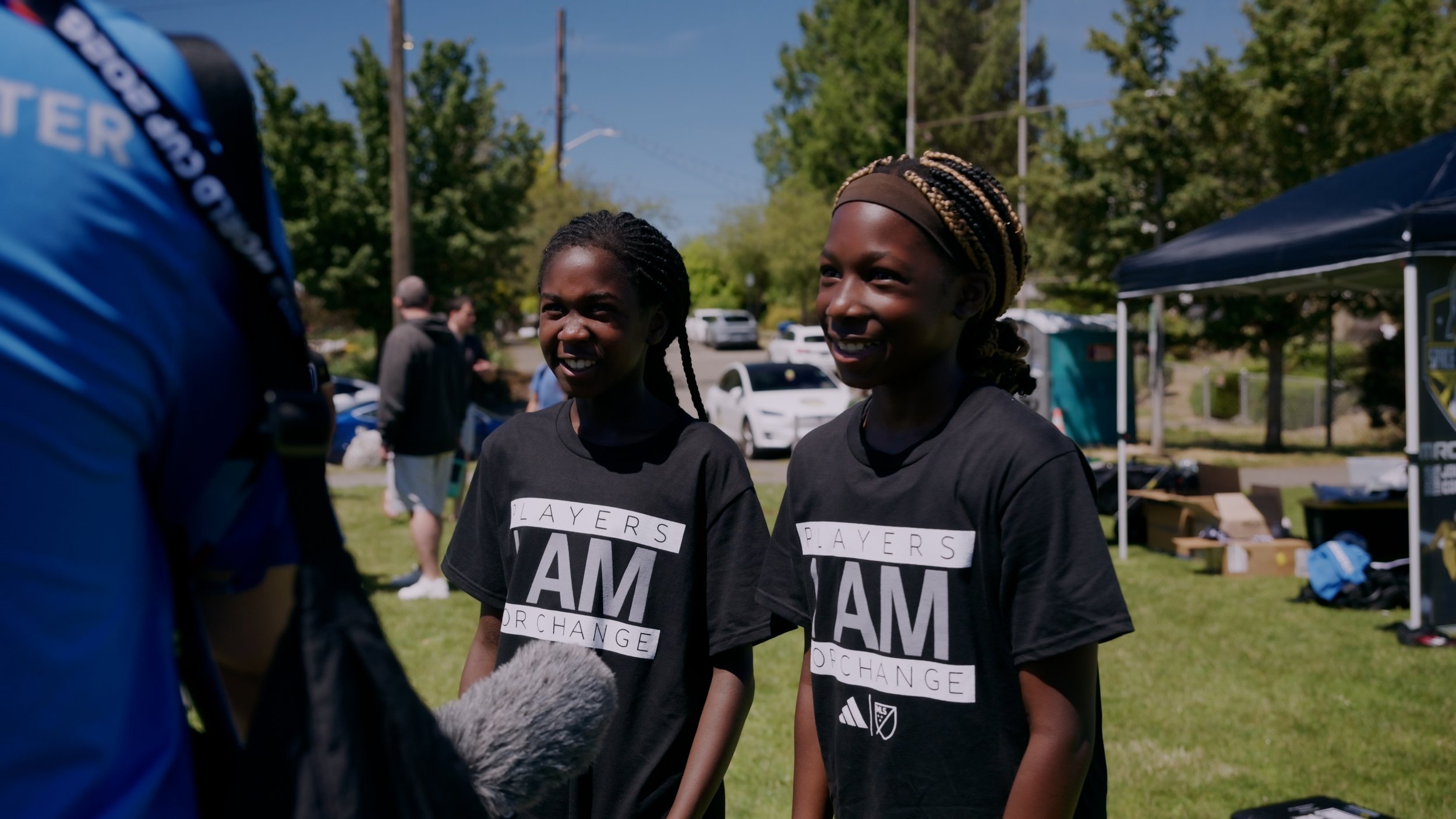
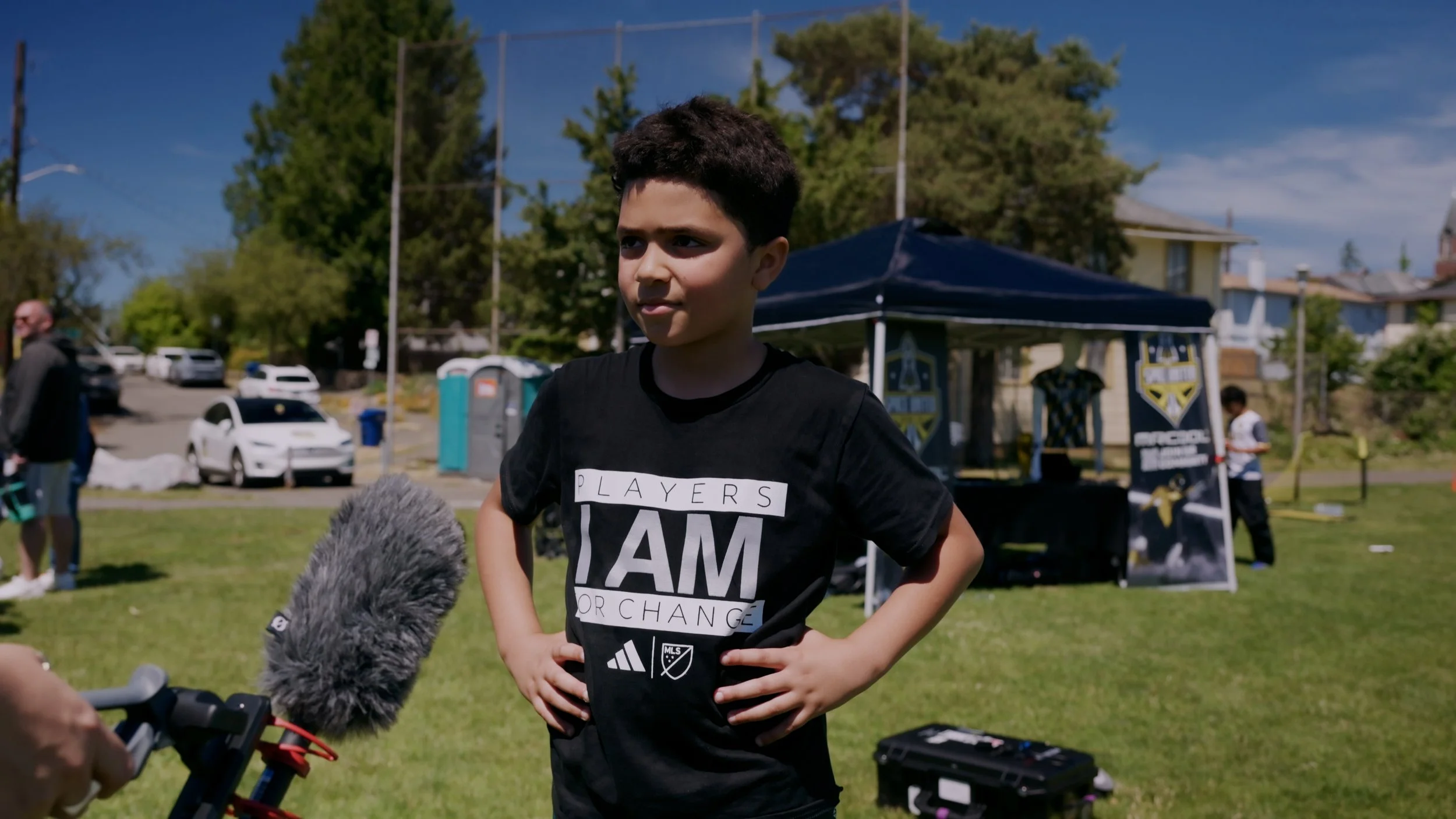
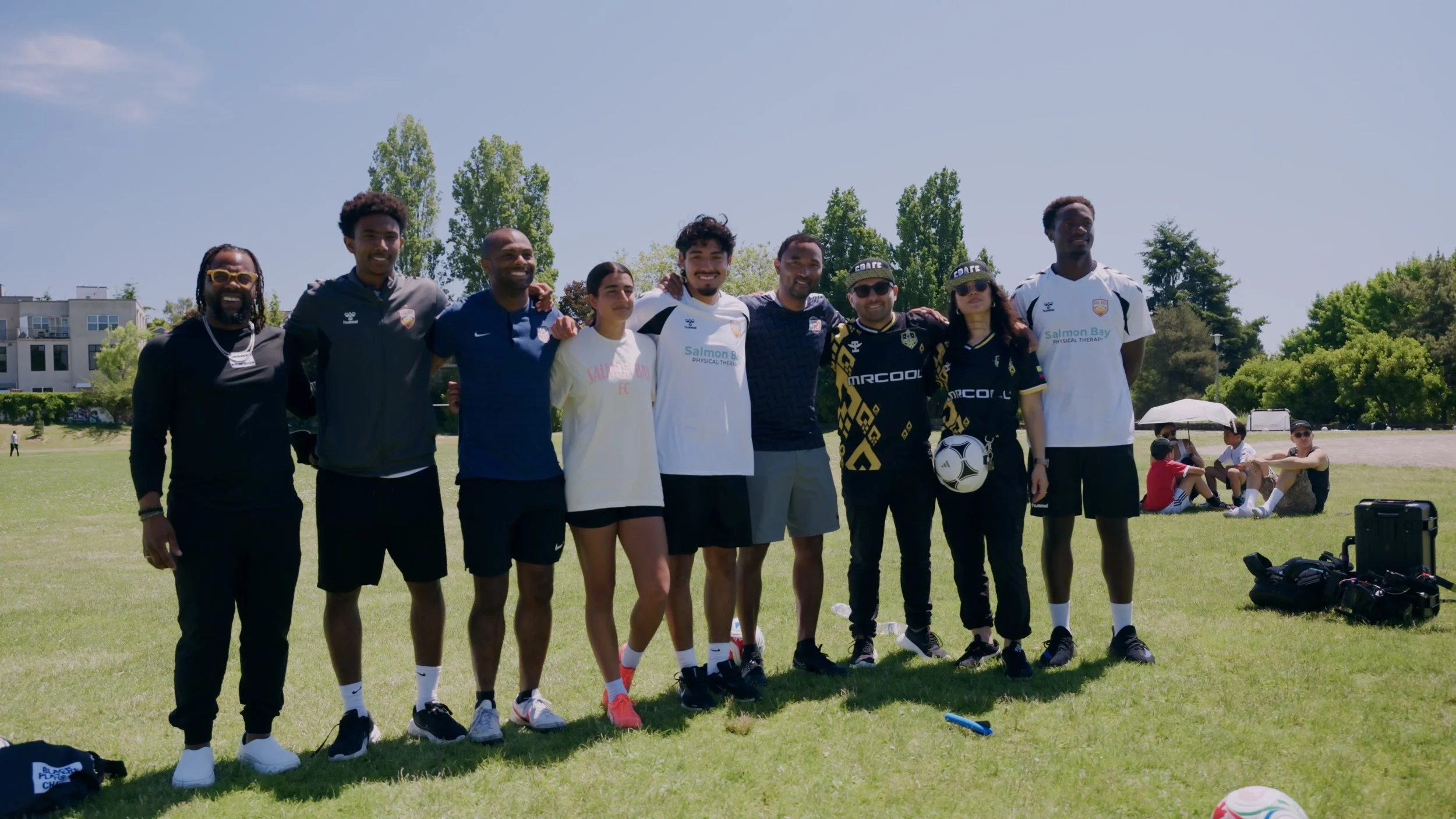
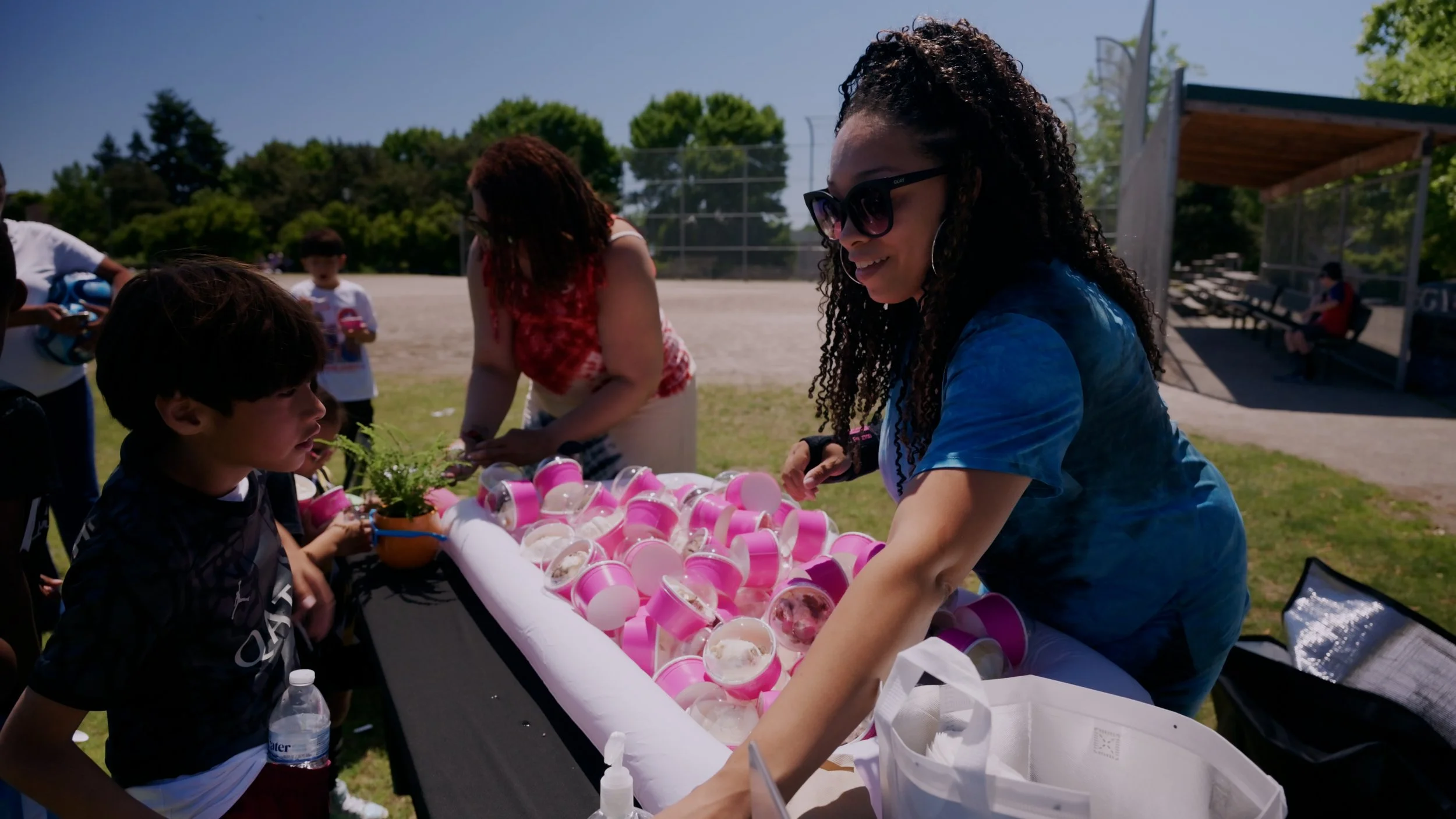
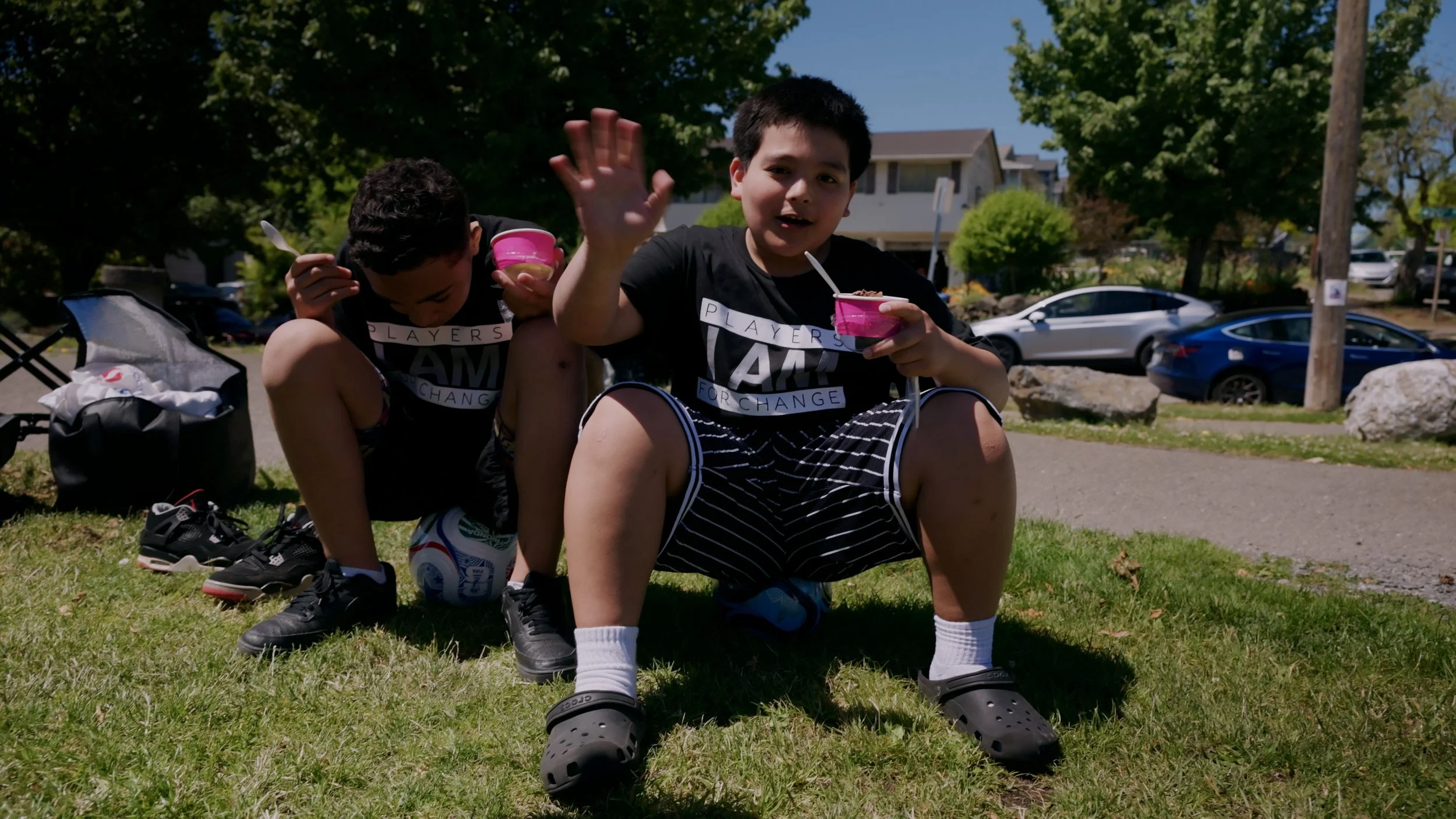
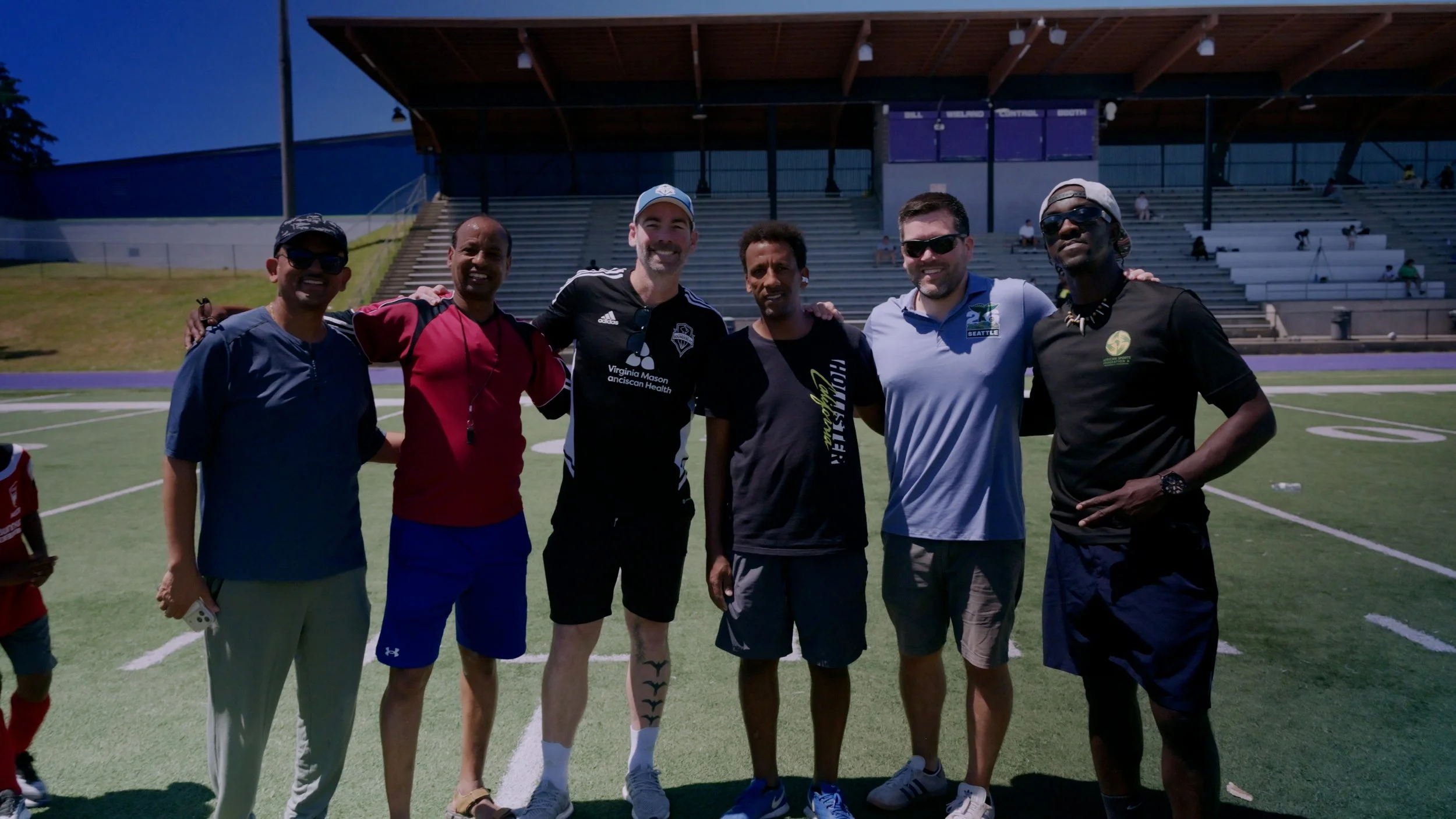
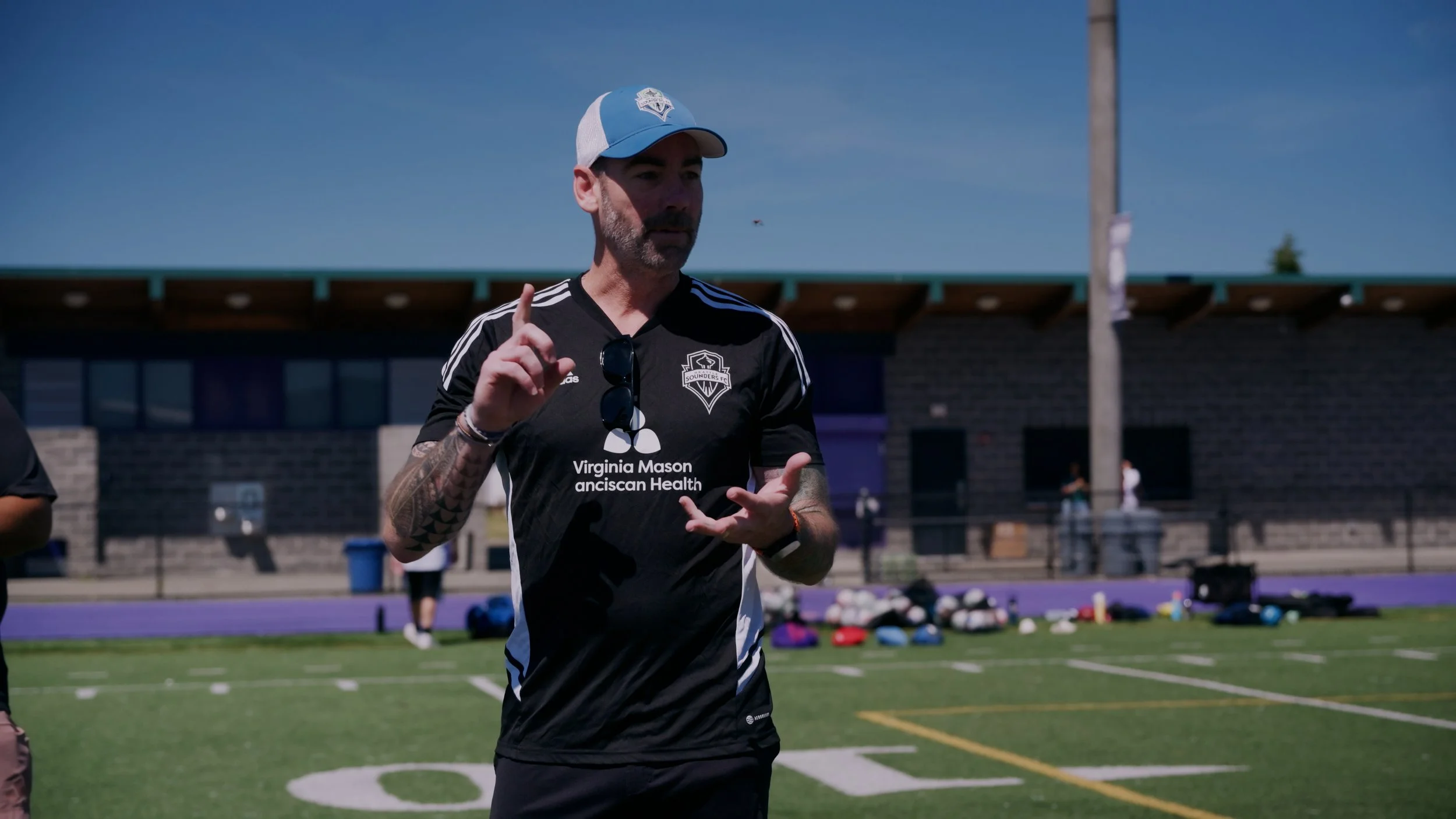
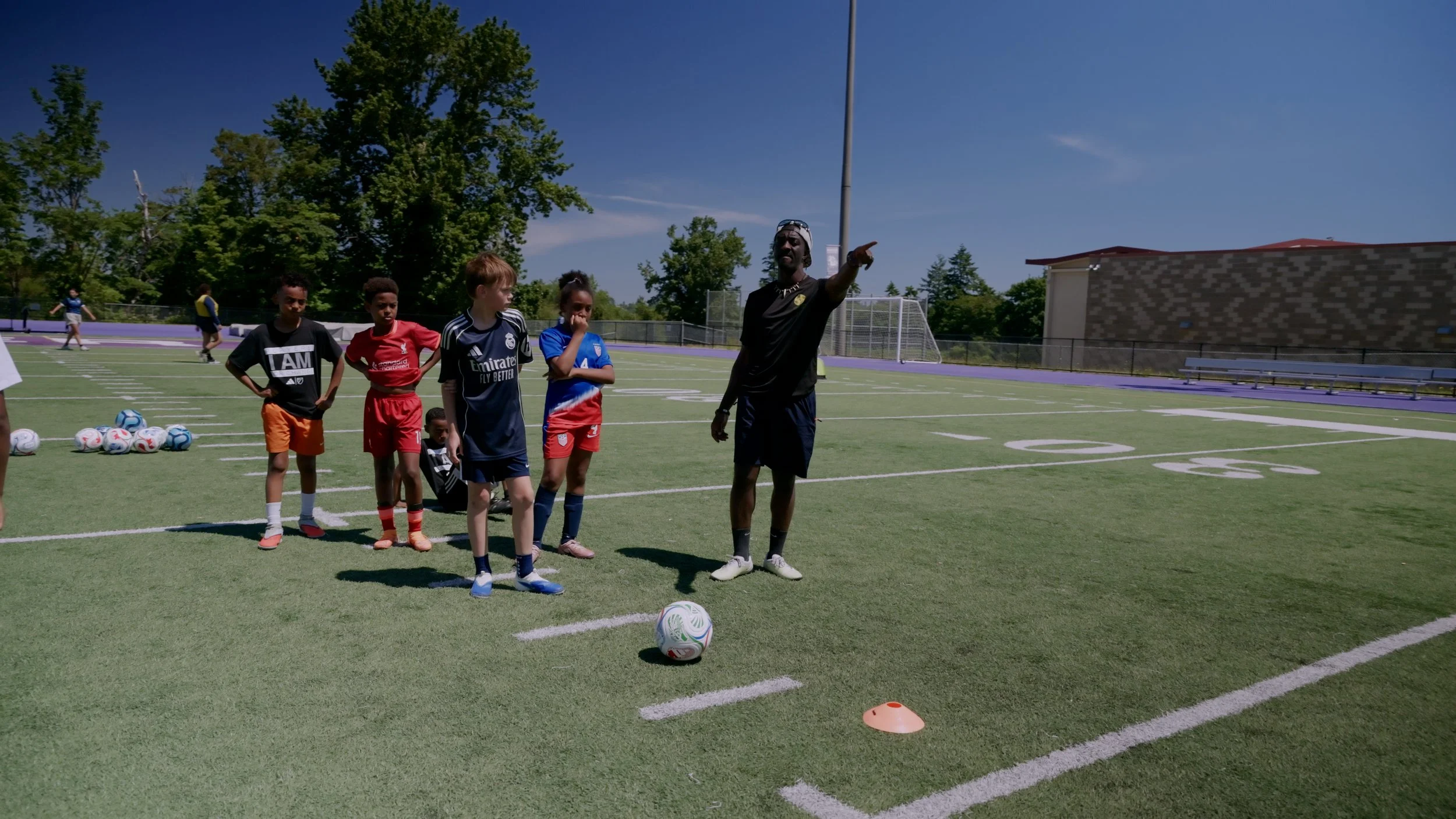
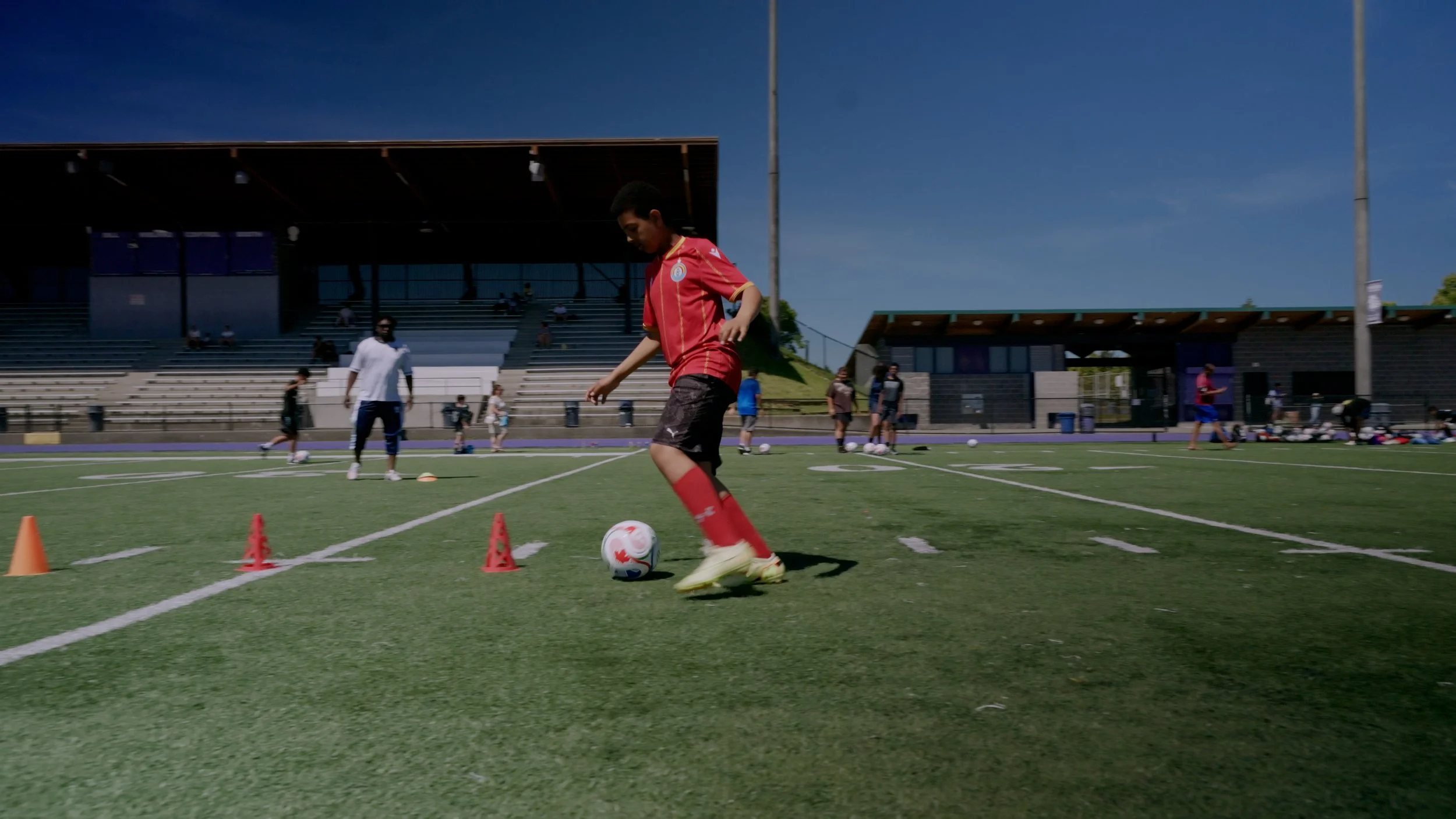
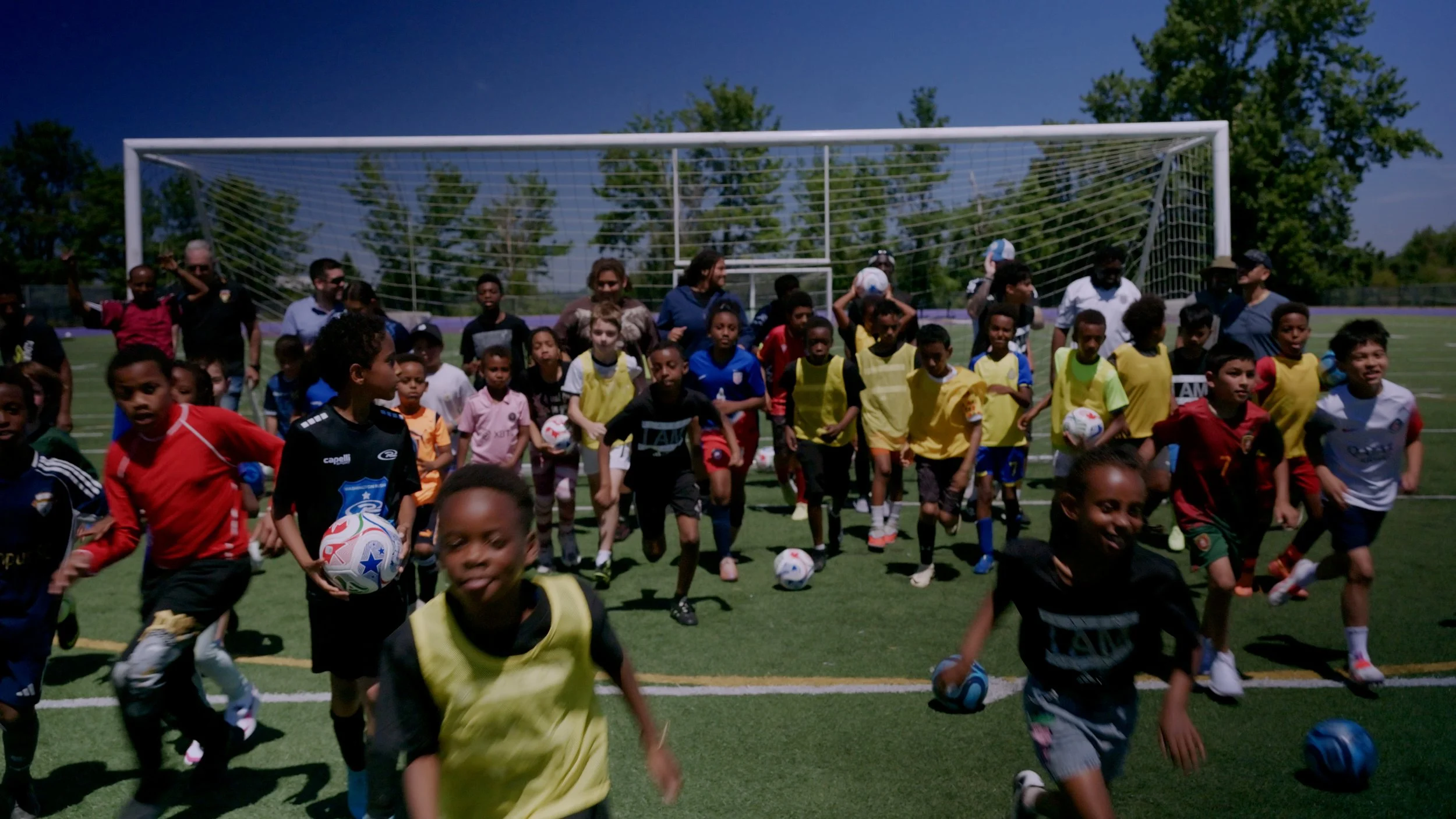
A tournament's legacy is only as strong as its accessibility. Far too often, major global events happen in a city but remain financially out of reach for the neighborhoods that call it home. True equity meant ensuring that soccer's accessibility translated directly to the grassroots level.
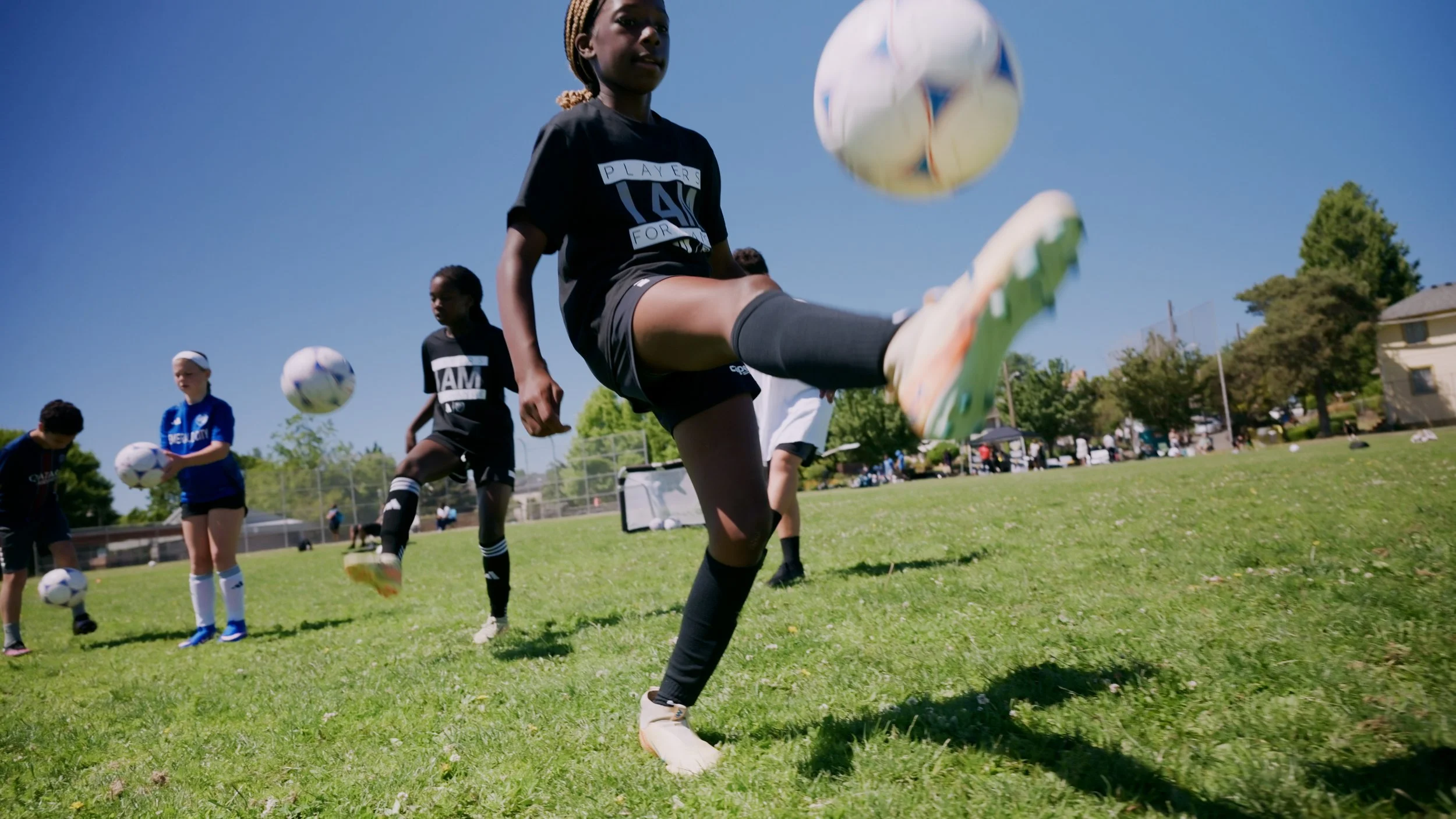
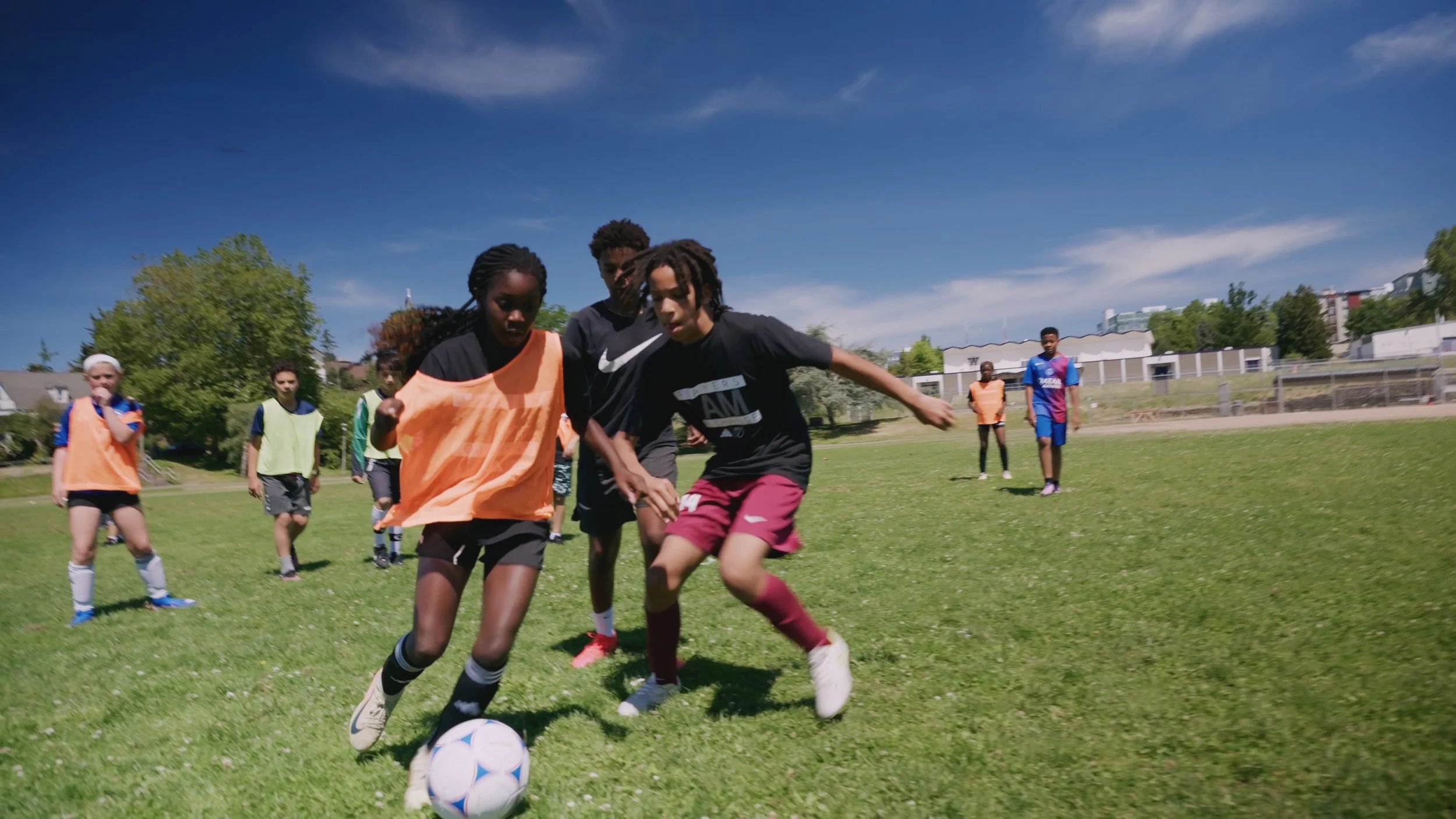
To bring elite training and mentorship directly to the community, Black Players for Change hosted two high-energy youth clinics for over 150 young players at Judkins Park in Seattle and Foster High School in Tukwila. These free skill development sessions were made possible through the incredible support of our dedicated local partners:
Beyond the pitch, we forged deep partnerships with grassroots organizations like the African Youth Sports Academy to bridge the access gap and ensure local youth and caregivers could experience a historic environment firsthand.
We are most proud of providing tickets for four local families to attend the U.S. match. These families and young players didn't just watch history unfold from afar; they stood right in the center of it.
3. Economic Equity: Moving the Needle with Intentionalist
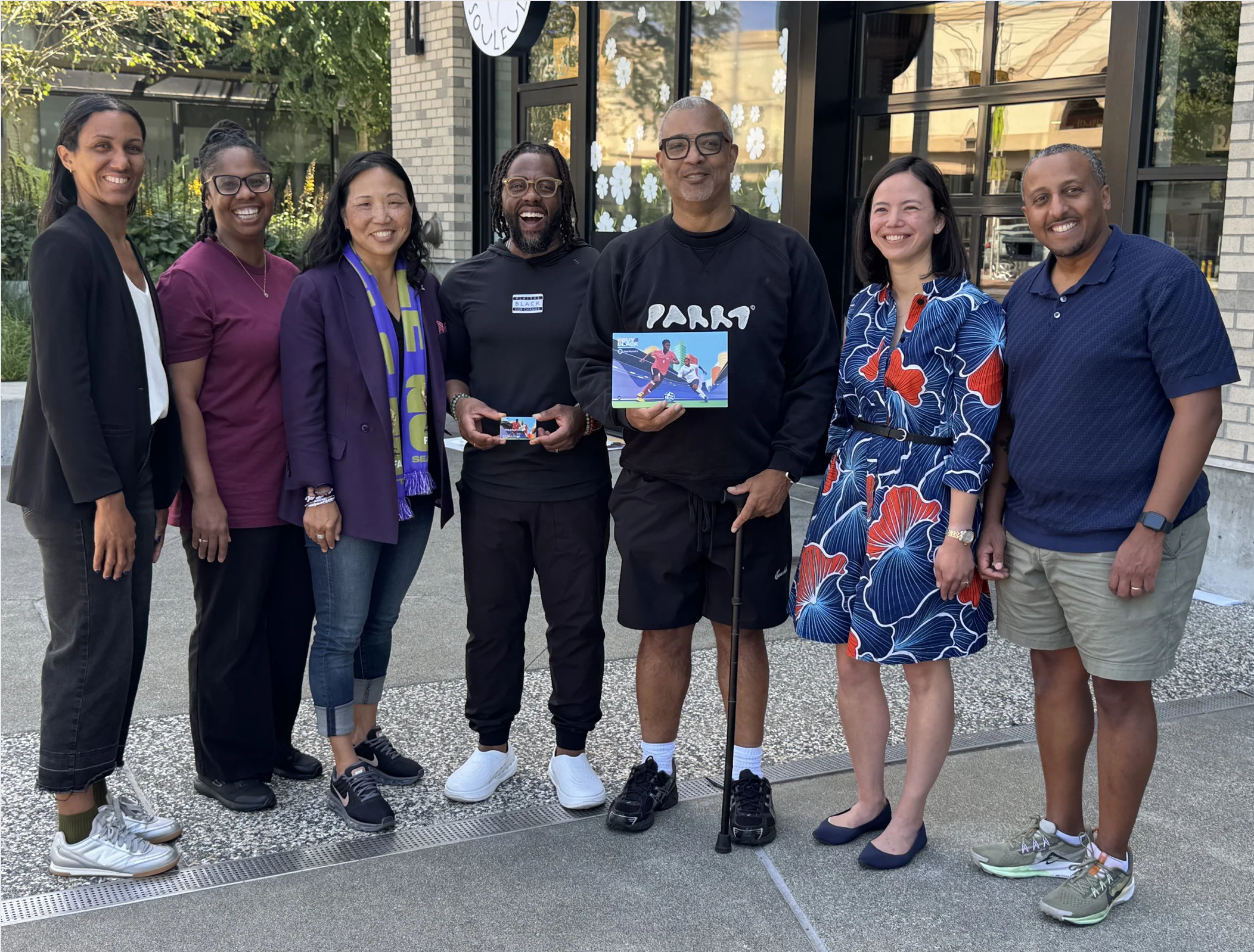
Photo: Omari Salisbury
Foot traffic is a vanity metric if it doesn't reach the neighborhoods and entrepreneurs who keep the city's culture alive. To ensure that tournament-driven visitor spending directly impacted local Black-owned businesses, workers, and creatives, BPC partnered with Intentionalist for a dedicated Buy Black campaign.
Through localized street teams and targeted digital pushes, we actively channeled fans, delegates, and tourists toward Black-owned eateries, retail spaces, and creative hubs throughout the region. By transforming passive consumers into intentional patrons, we proved that economic legacy isn't an accidental byproduct of a tournament; it is a conscious choice.
Learn more about the Buy Black Card
4. Where Innovation Meets Impact: The F5 Panel
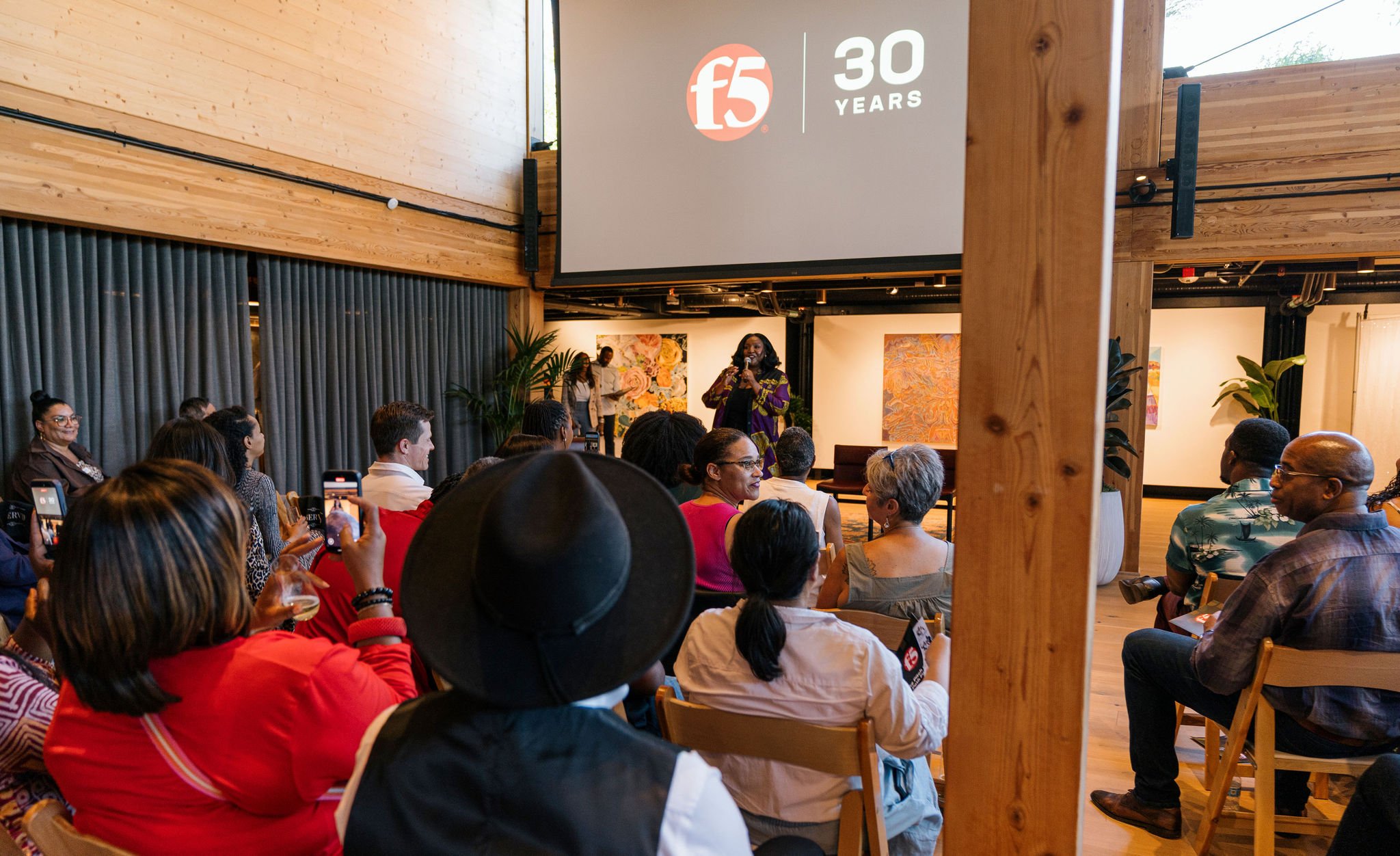
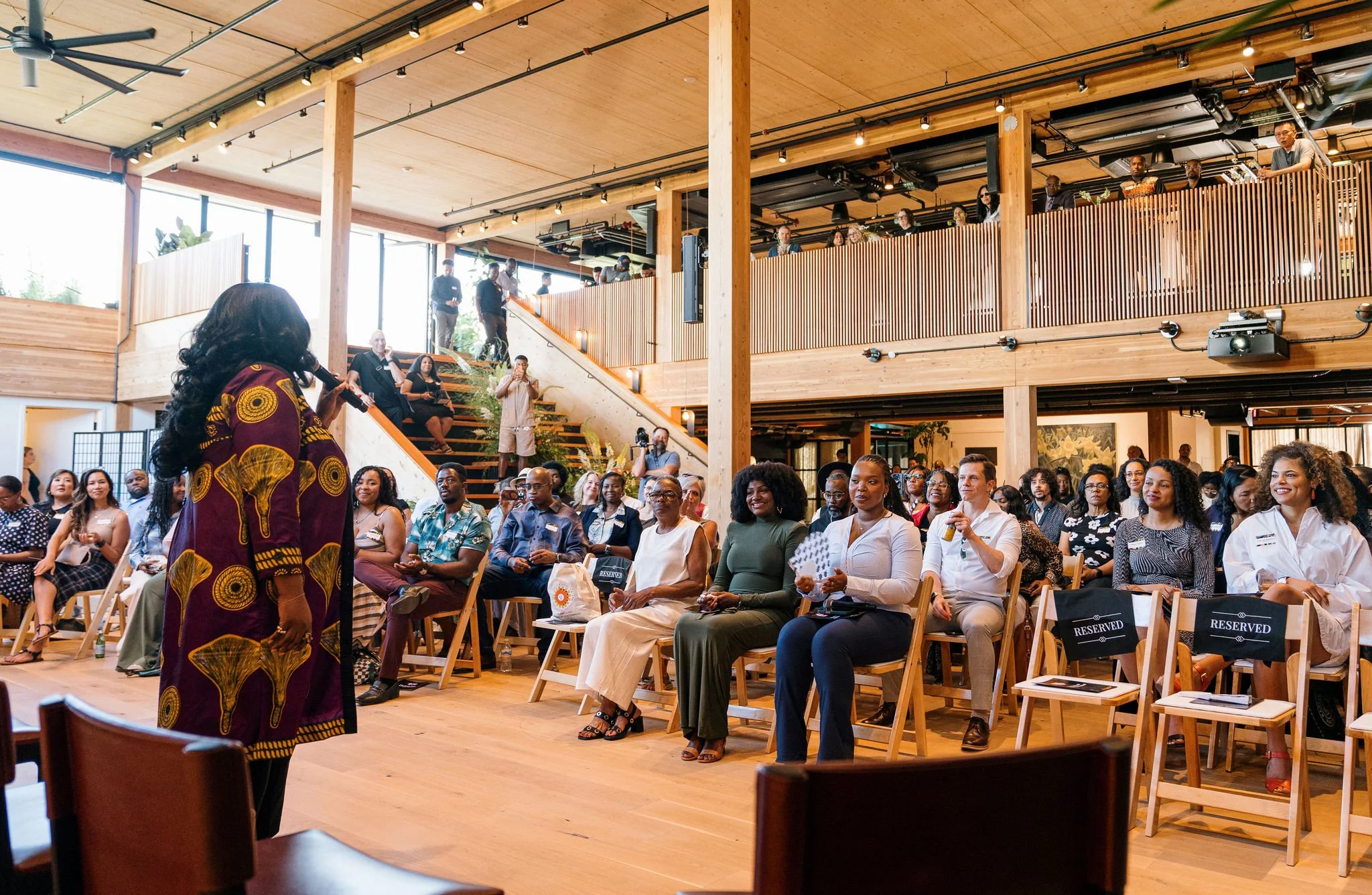
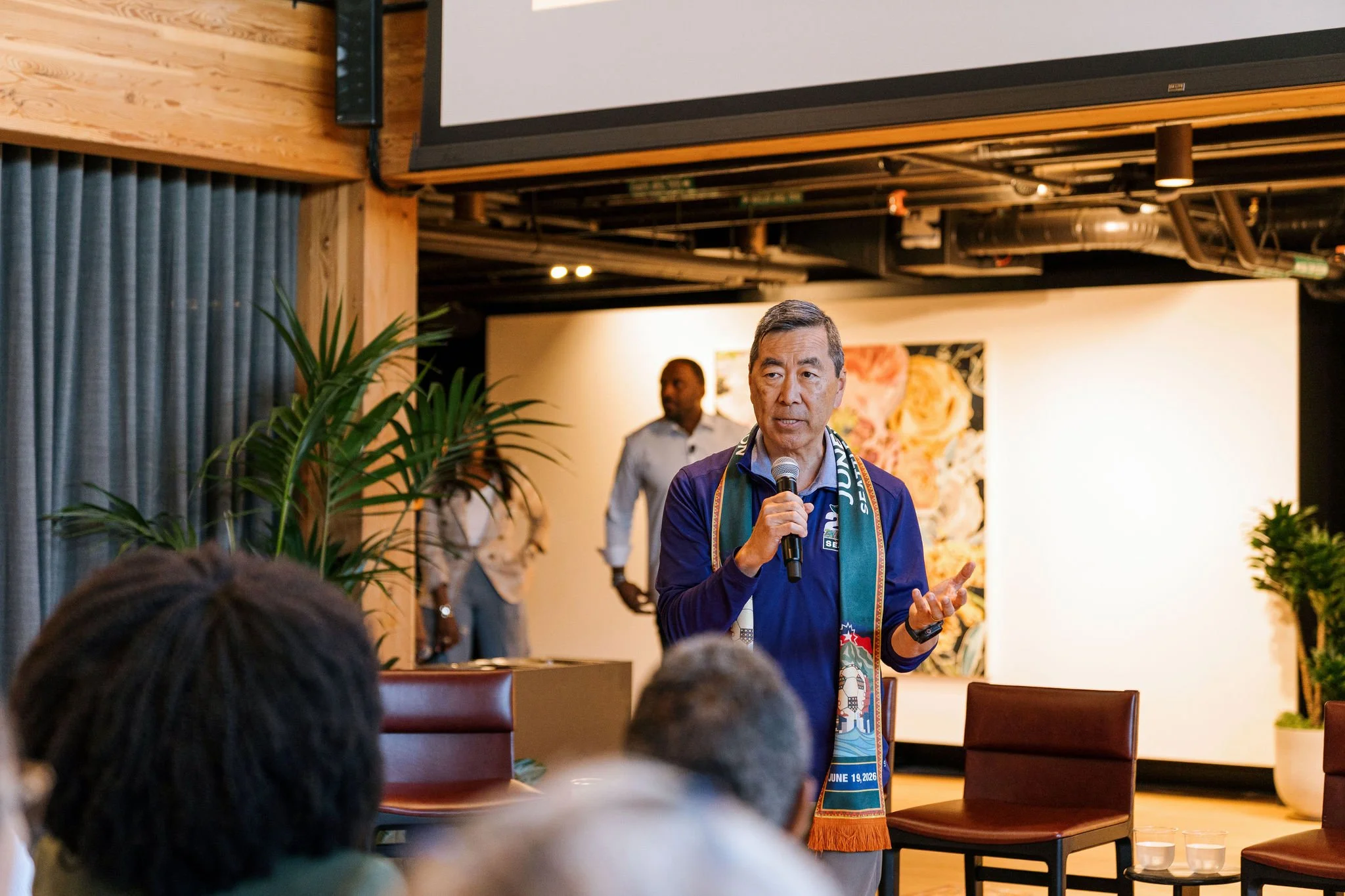
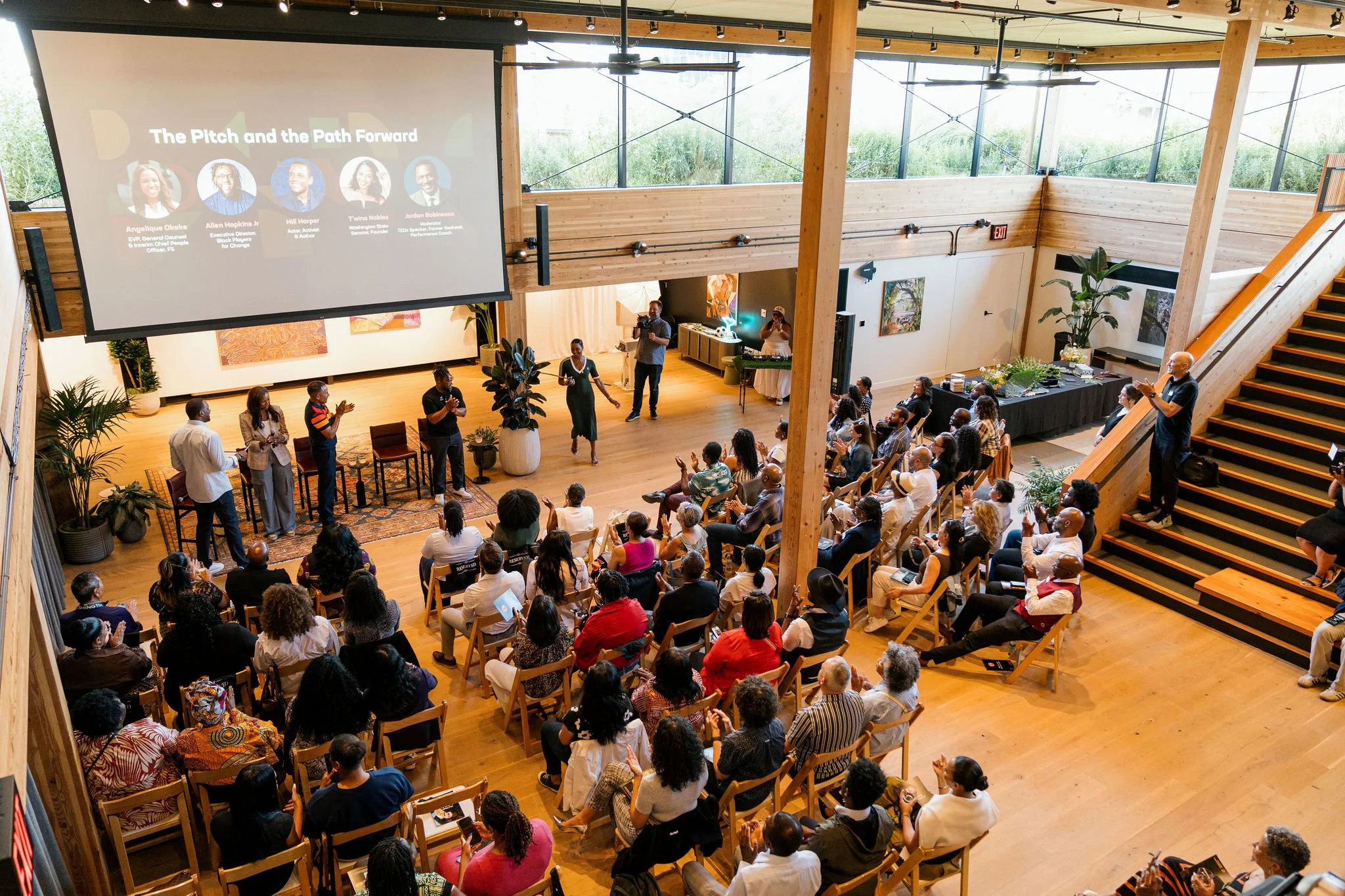
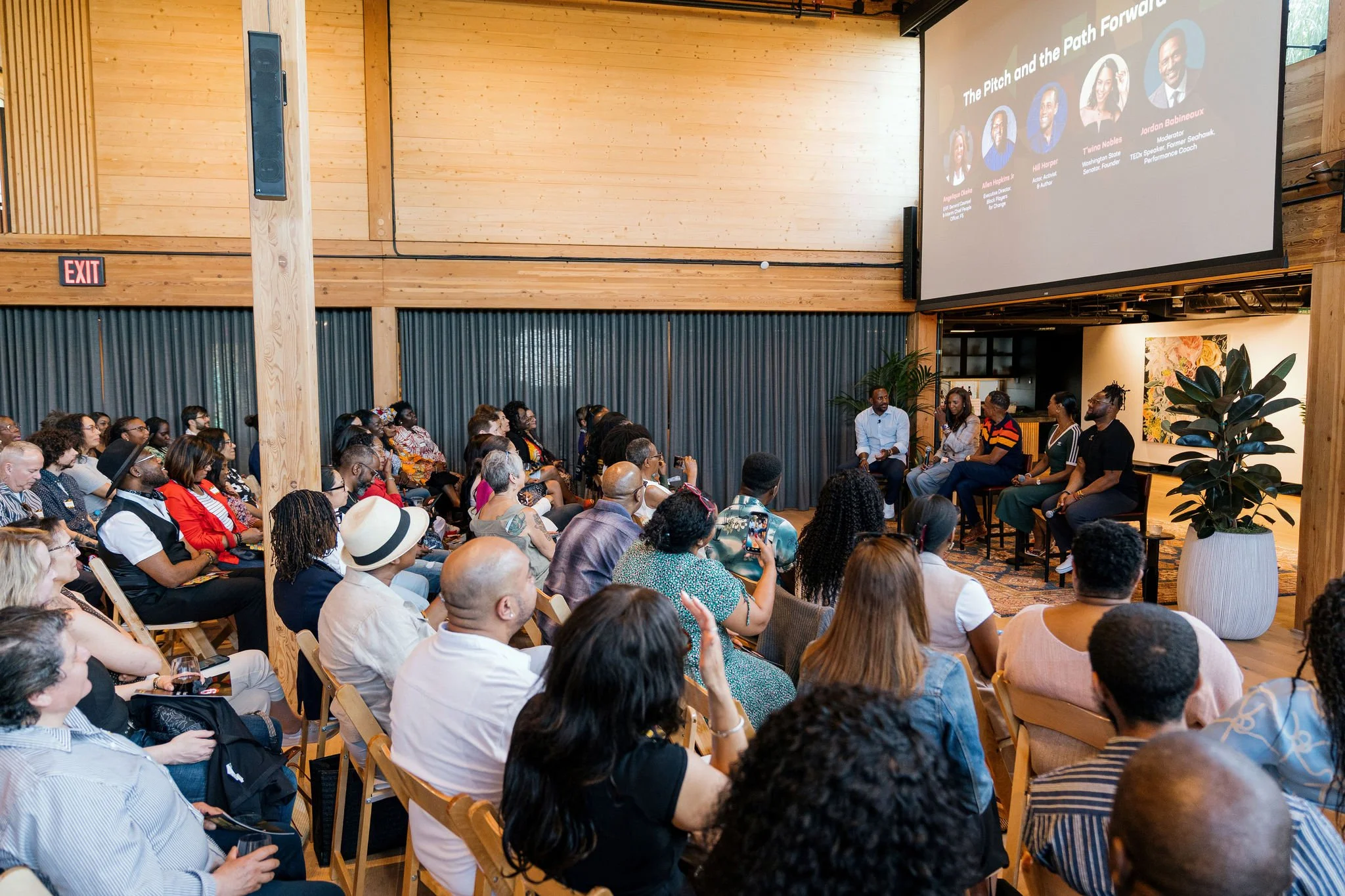
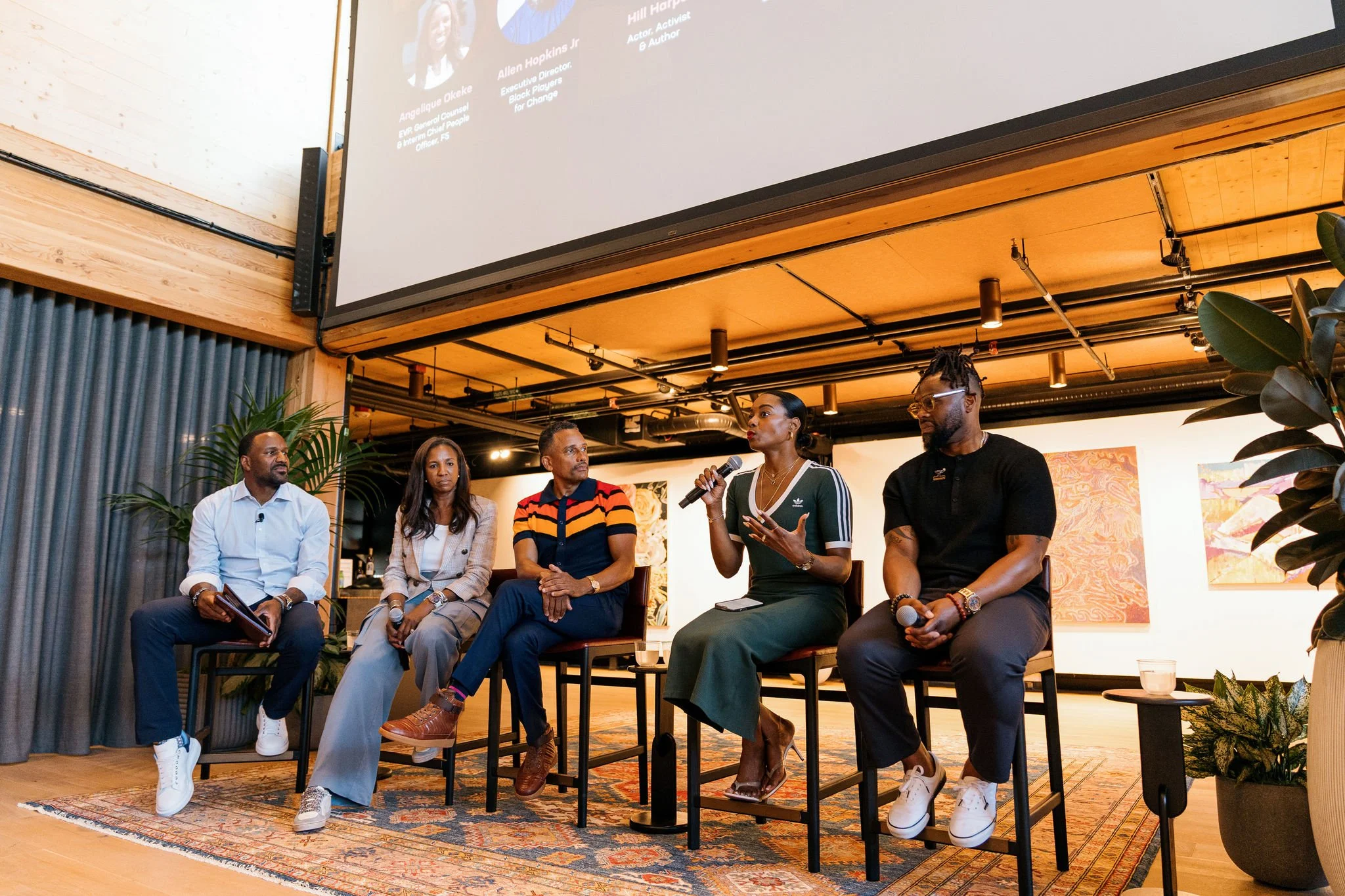
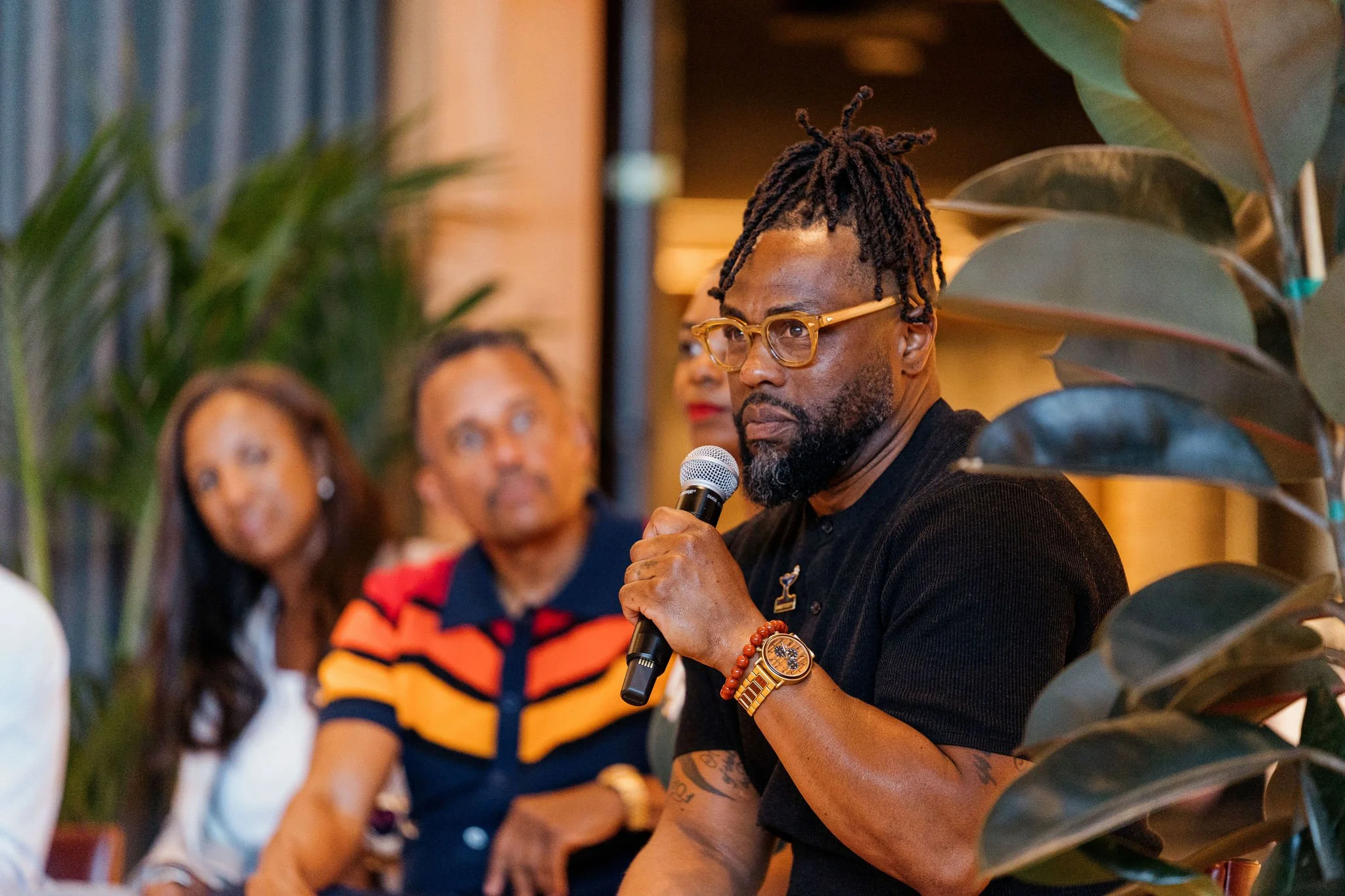
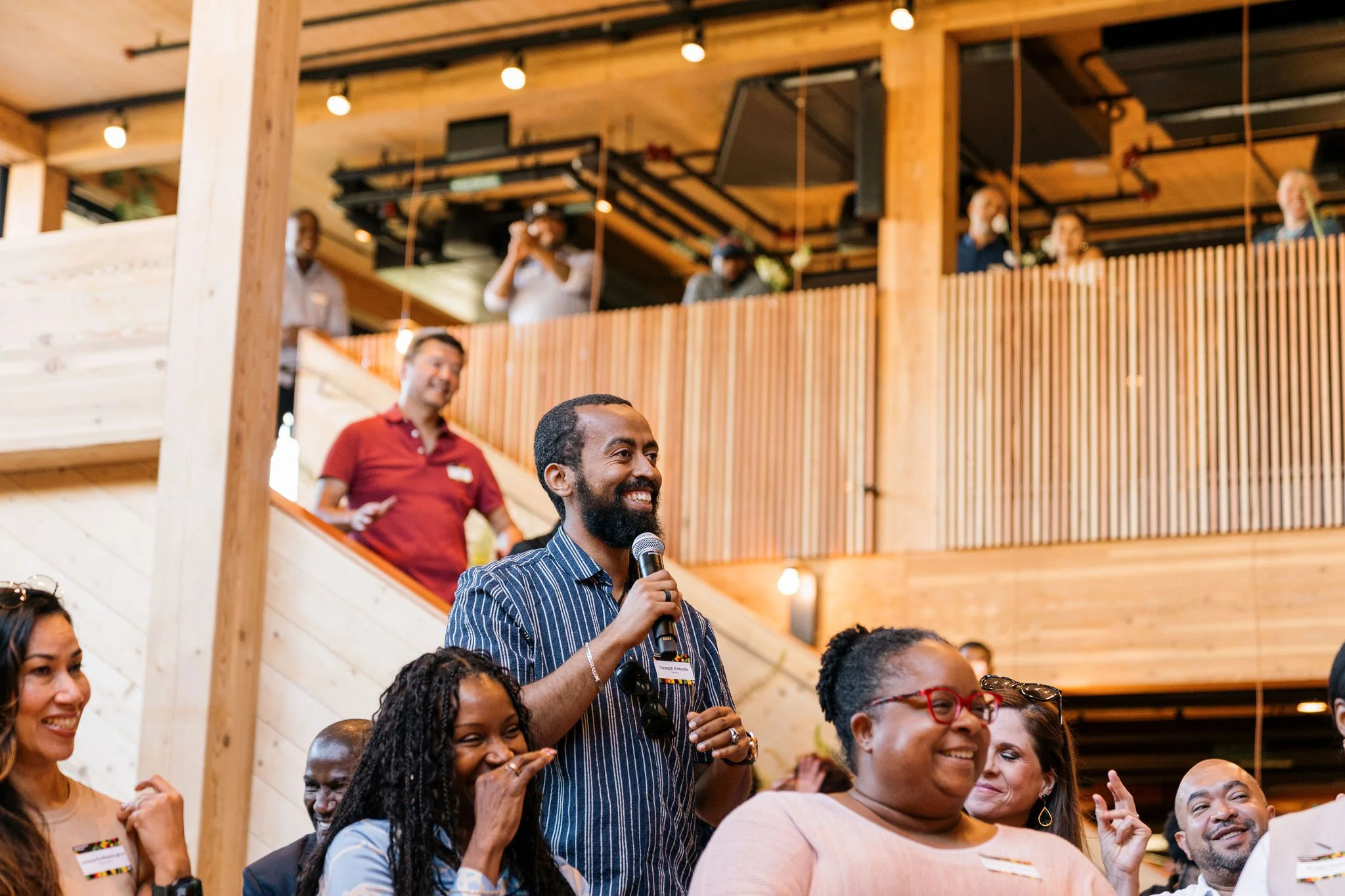
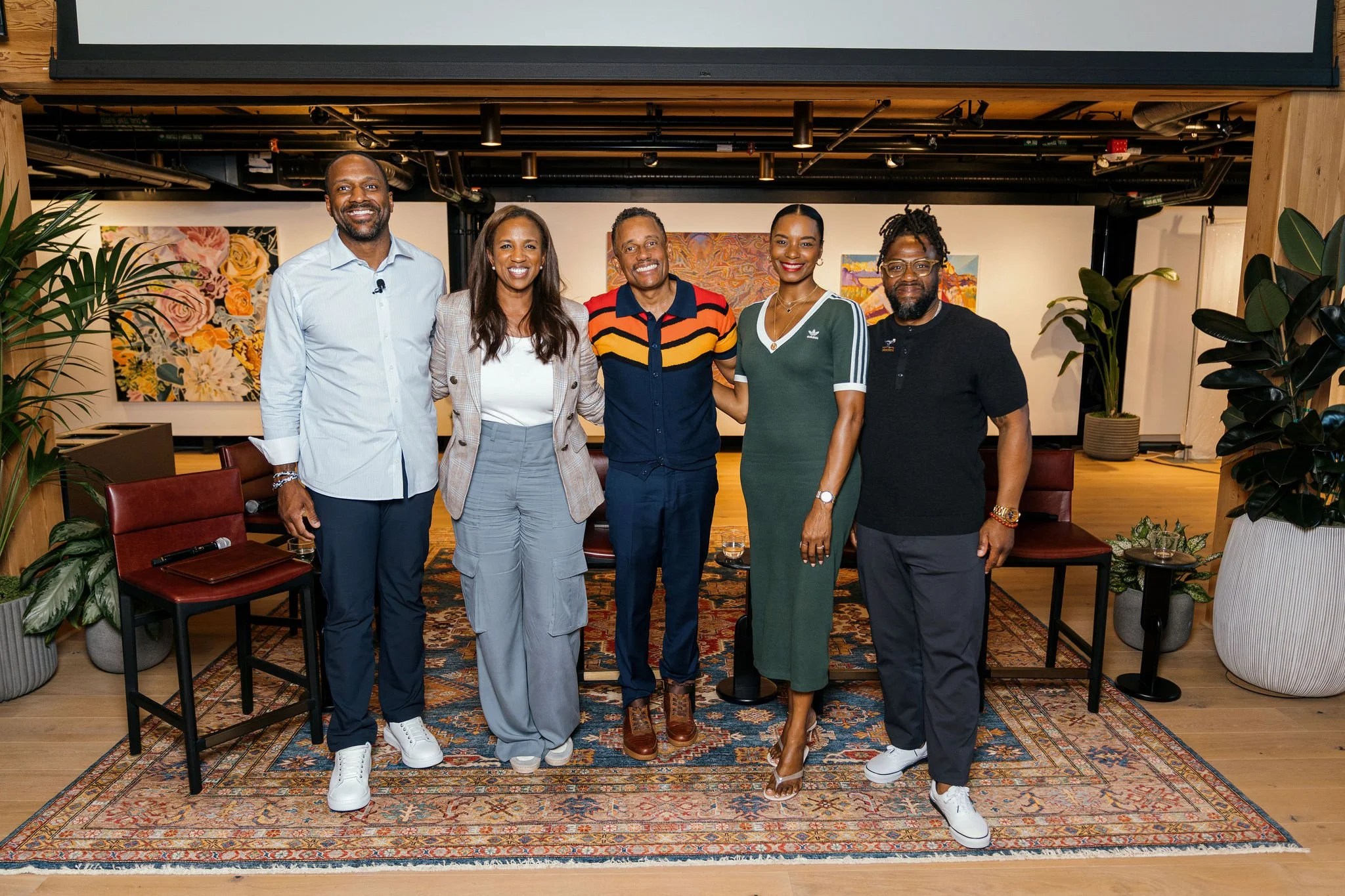
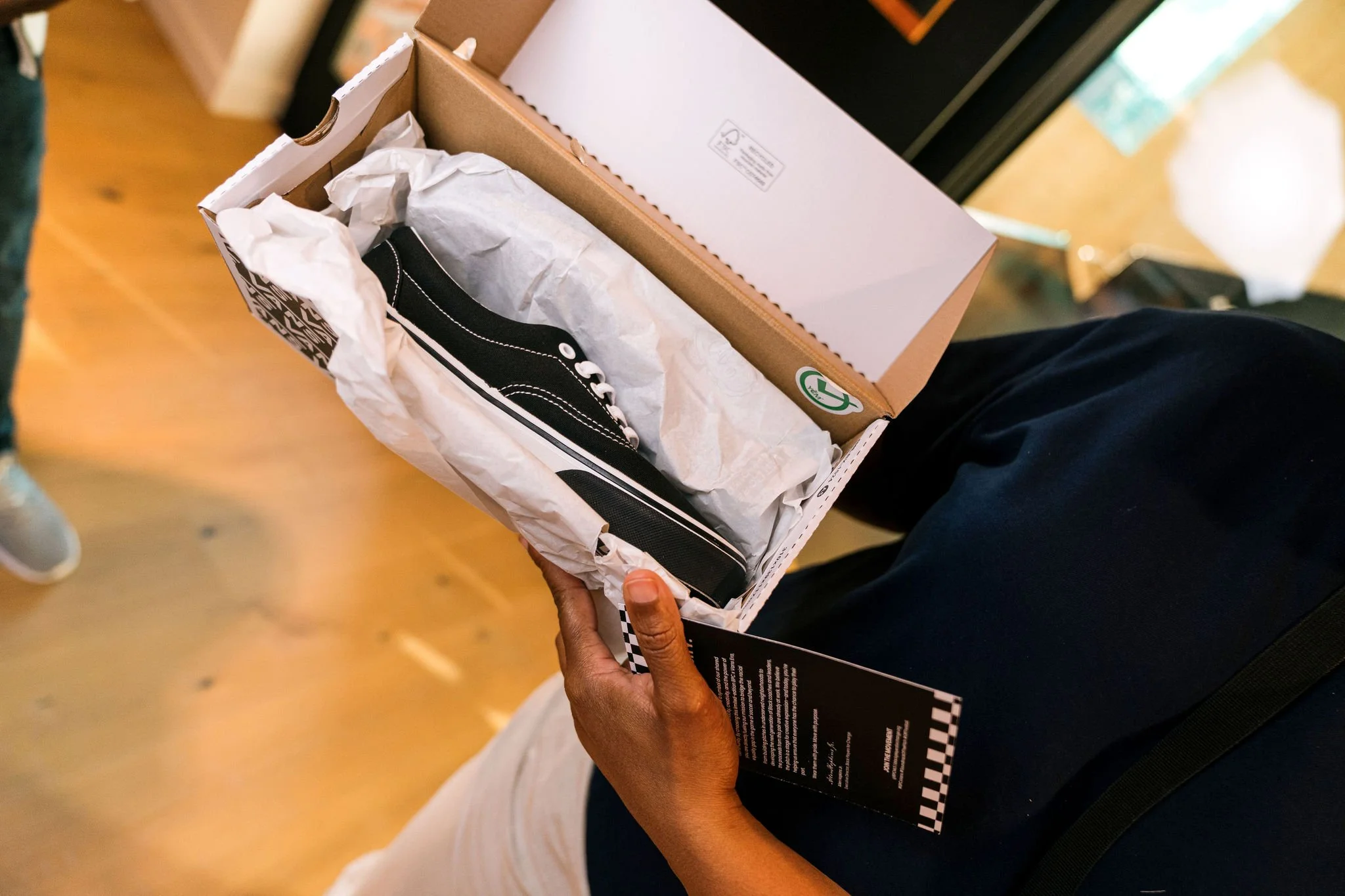
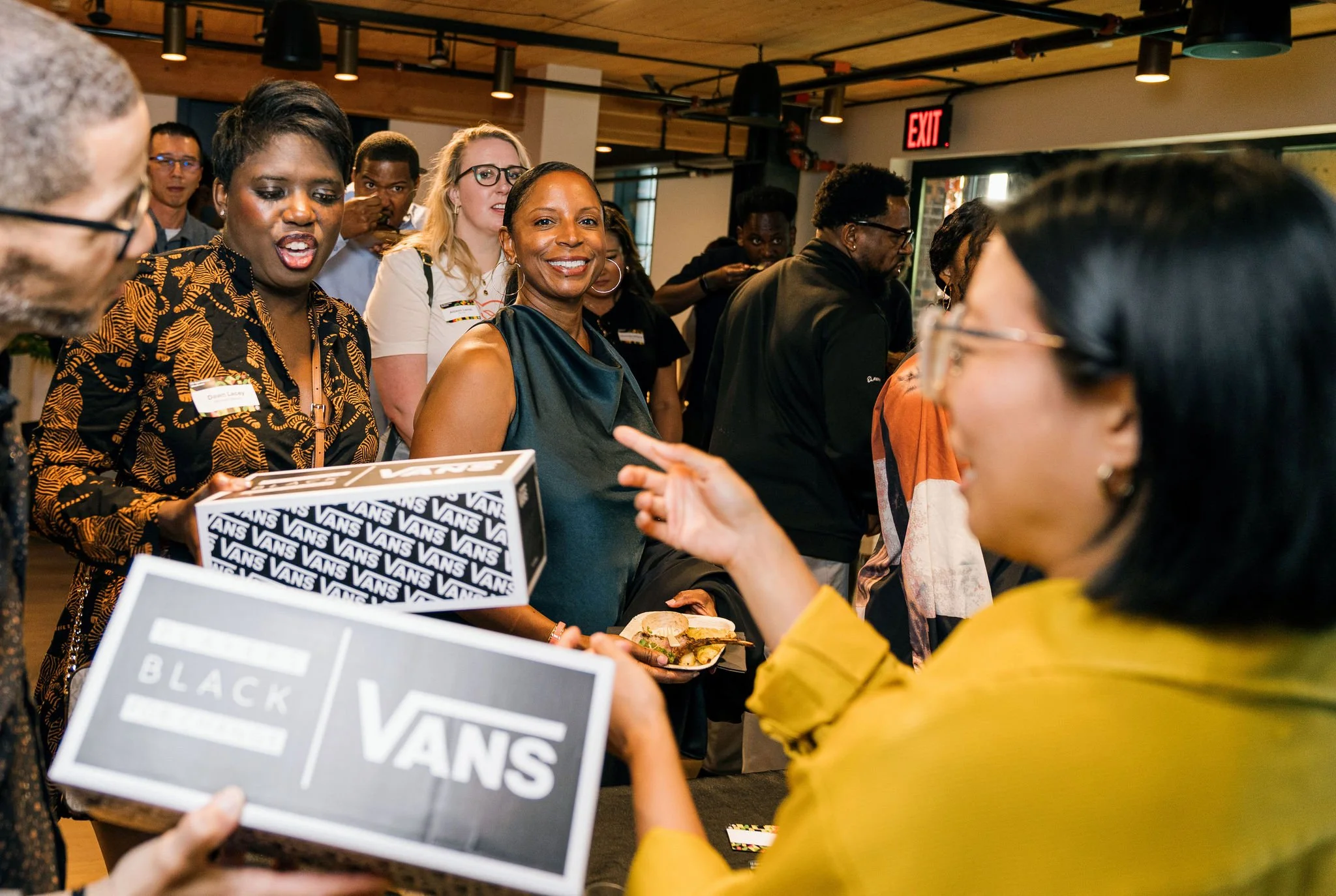
Seattle is a global tech capital, and a modern sporting legacy requires forward-thinking digital architecture. At the F5 Panel, we brought tech innovators, community organizers, and sports executives into the same room.
The discussion centered on a critical frontier: How do we leverage modern technology, data, and global sports platforms to bridge equity gaps? The insights generated on that panel did not stay in the room; they provided a digital-to-physical framework for how future host cities can use major events to accelerate digital equity, modern infrastructure, and community resources.
5. Designing Juneteenth unmistakably local
KUOW Photo/Casey Martin
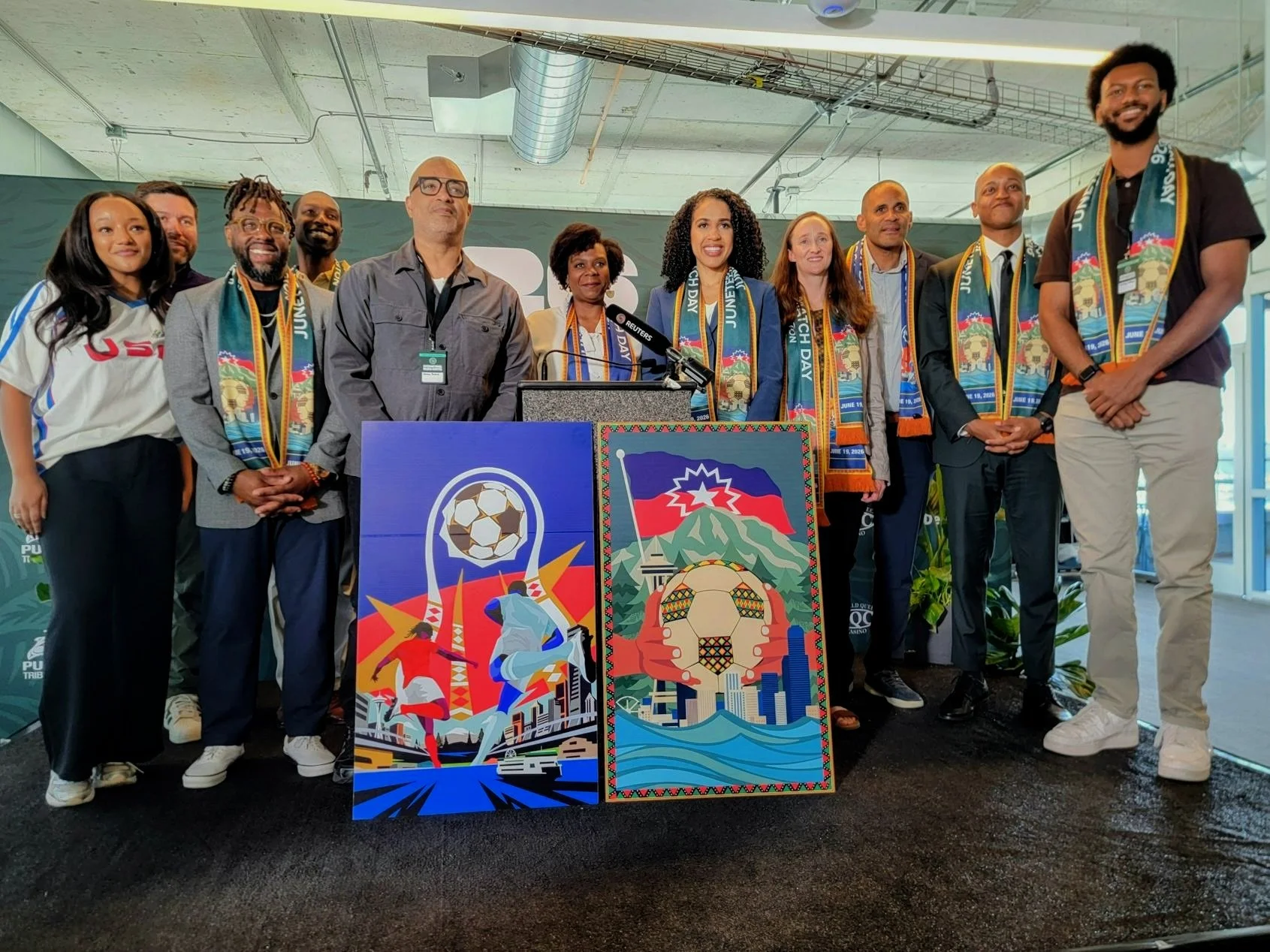
A celebration of this scale needed a visual language rooted in the same community it was honoring. In partnership with ARTE NOIR, the local organizing committee chose Seattle-based artists Damon Brown and Samray Estifanos to shape the initiative's visual identity from the ground up.
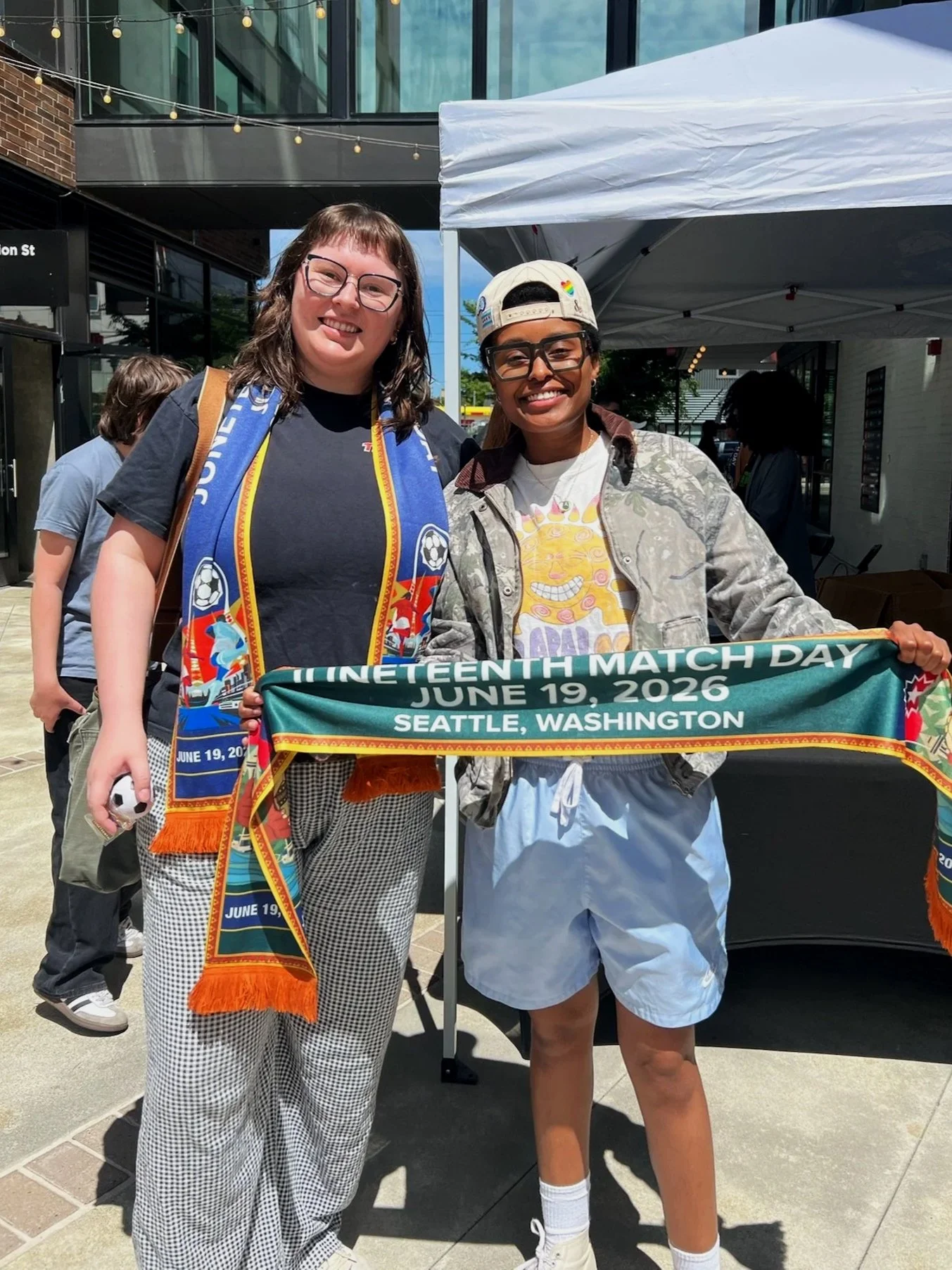
Their work showed up everywhere fans turned: commemorative posters throughout the city, matchday scarves worn in the crowd, collectible pins passed between fans, and full-scale art installations placed around Seattle. Each touchpoint carried the same throughline: Black artistry as the visual backbone of the celebration, not an afterthought layered on top of it.
By putting local artists at the center of the branding, the initiative extended its economic and cultural impact well beyond matchday itself, turning the streets of Seattle into an extension of the stadium experience.
The Dust Settles, The Blueprint Remains
The matches have been played, and the history books will record the scores. But the true victory in Seattle wasn't just what happened on the pitch; it was what happened in the community.
We collectively built a framework demonstrating that global sports can and should be used as a vehicle for social equity, economic justice, and cultural preservation. Thank you to the artists who lent their vision, the tech leaders who lent their insight, the local businesses who welcomed the world, and the youth who reminded us exactly who we are building this future for.
The games may be over in Seattle, but the blueprint remains.
Special thanks to Peter Tomozawa, Dylan Ordoñez, Lamar Neagle and the entire Juneteenth Match Advisory Committee. It was an honor to have been a part of this year’s World Cup and create a far reaching cultural movement throughout the city.
About Black Players for Change
Black Players for Change (BPC) is an award-winning independent 501(c)(3) nonprofit organization consisting of over 170+ Black players, coaches and staff from MLS, working to bridge the racial equality gap that exists in society. BPC is committed to tackling the racial injustices that have limited Black people from having an equitable stake in the game of soccer and society. Among the many goals, the organization strives to advance the attention on human rights inequalities from protests to programs, partnerships, and policies that address systemic discrimination. For more information visit www.BlackPlayersForChange.org.